
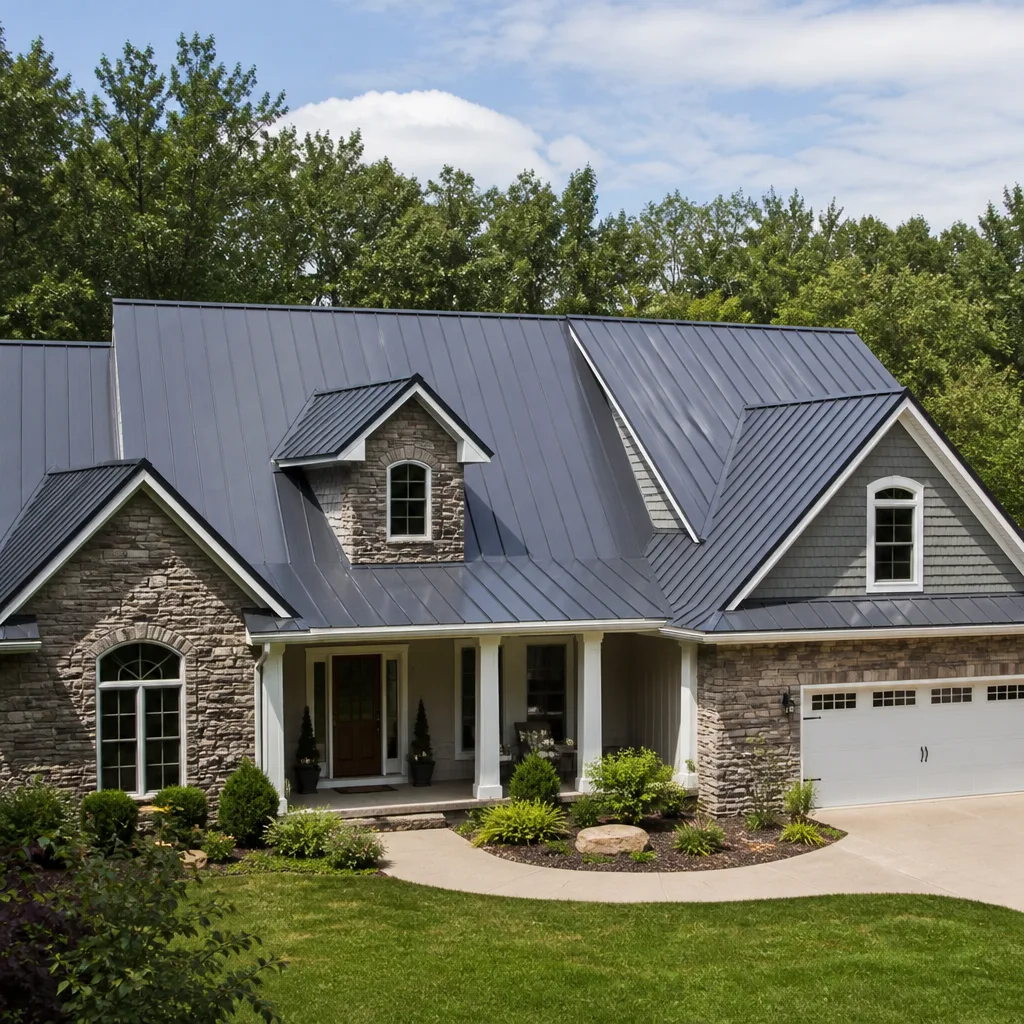
 Metal roofing
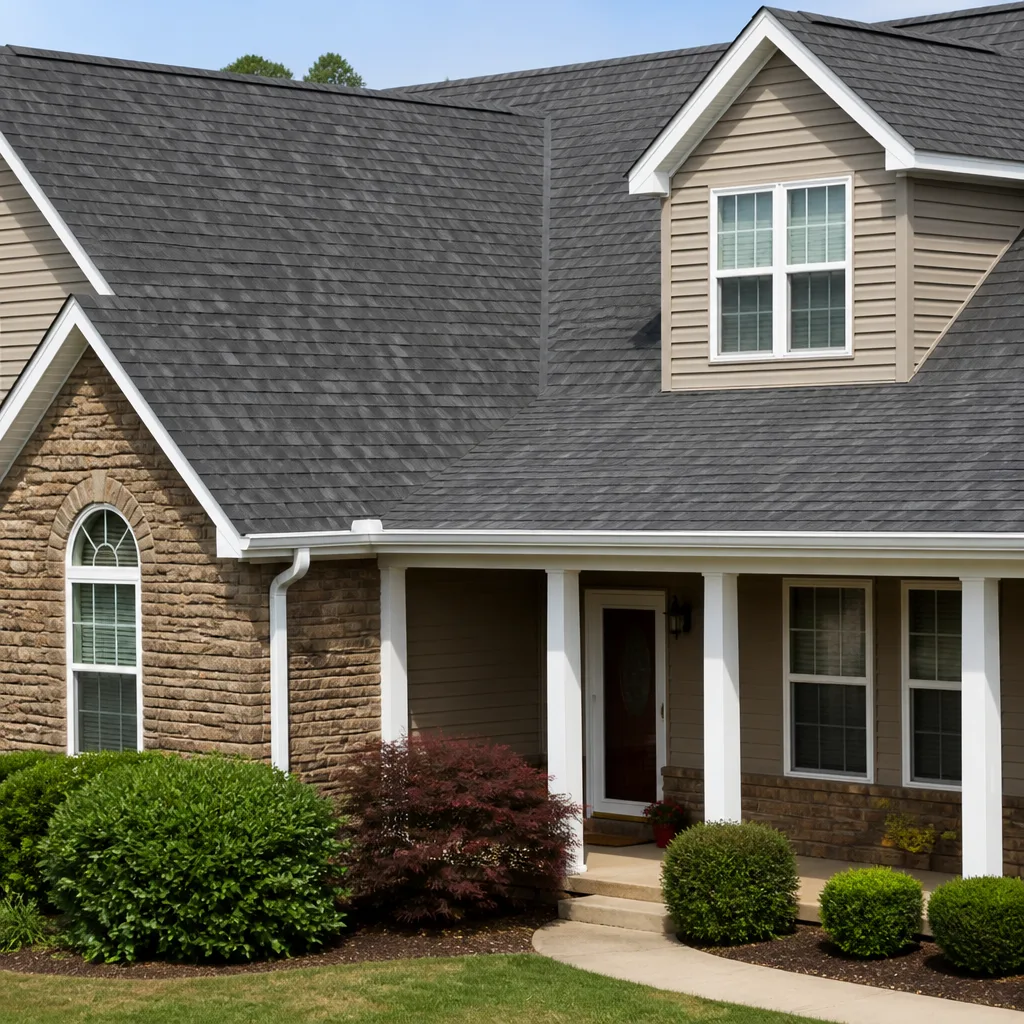 Architectural shingles
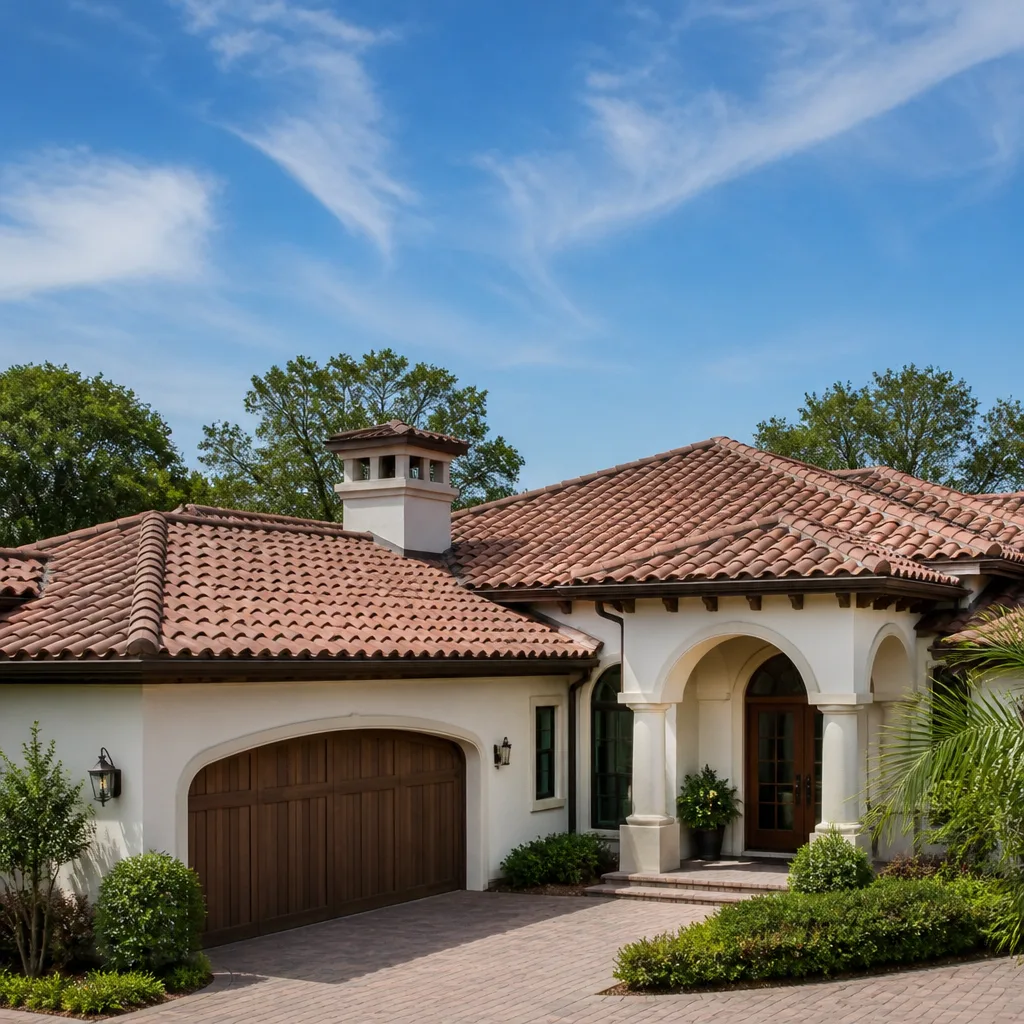 Tile roofing
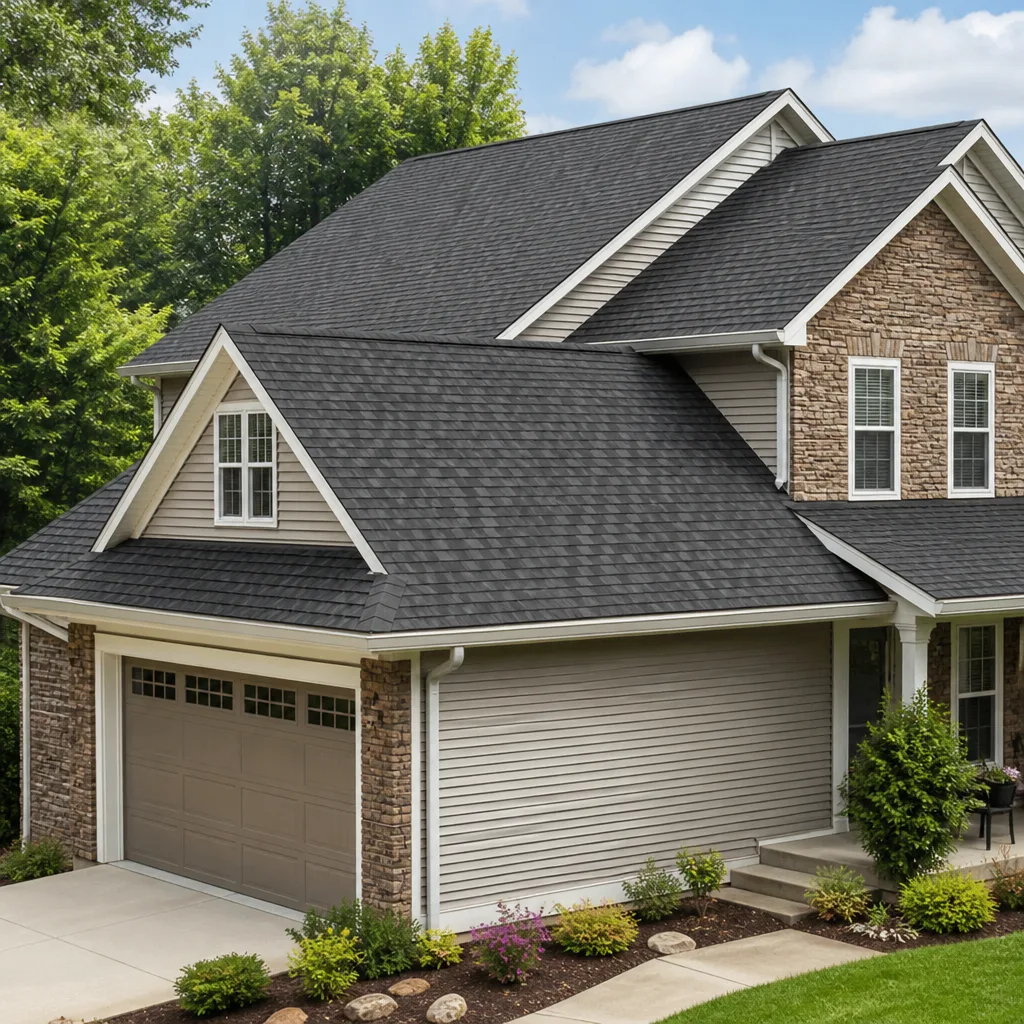 GAF
GAF Owens Corning
 Flat & low-slope
Free roof inspection with deck photos before we talk money - GAF and Owens Corning certified installation
Tamko Ridge Vent Installation: The Woodland Hills Owner’s Guide
We stock and install Tamko-compatible ridge vent systems throughout Woodland Hills, with most full ridge vent installations running $850 to $1,400 depending on ridge length and the condition of your existing decking. Our trucks carry Tamko’s 4-foot vent sections and matching profile caps, so we can usually complete installation the same day we diagnose the problem. Most homeowners discover their ridge vent has failed two ways: they spot lifted or cracked shingles along the peak after a Santa Ana wind event, or they notice attic temperatures climbing even though their AC is working hard.
Ridge vents are the exhaust half of your attic ventilation system. When the vent cracks, lifts, or separates from the ridge line, hot air stops escaping. In Woodland Hills summers, that means an attic that hits 140 degrees and a second-floor that never quite cools down. Tamko’s roll-form vent design is well suited to the Valley’s heat, but like any exterior plastic or metal component, it ages differently out here than it would in a milder climate.
Which Tamko Models This Applies To
Tamko’s ridge vent line covers three main product families, and the compatibility question matters more than most homeowners expect. The classic Tamko Metal-Aire is an aluminum-based roll vent with an internal baffle, while the newer Tamko Composite Ridge Vent uses UV-stabilized polypropylene. There’s also a Tamko hip and ridge vent designed specifically for use with their Heritage and Elite shingle lines, where the cap shingles are cut thicker and need a wider vent profile to seat correctly.
The real gotcha with Tamko ridge vents in Woodland Hills is the UV exposure factor. Tamko’s composite vents carry a UV stabilizer, but after 10 to 15 years of direct Southern California sun, that stabilizer breaks down. The plastic gets brittle, and cap shingle nails that were once snug start pulling through. If you’re replacing a vent on a roof older than 12 years, we’ll check the decking and fasteners at the same time, because a new vent on compromised wood is a temporary fix, not a repair. We carry genuine Tamko sections on our trucks and, when an older series is discontinued, we’ll recommend an aftermarket match that preserves the vent’s net-free-air area rather than silently downgrading it.
Styles & brands we work with
Signs Your Tamko Ridge Vent Installation Is Failing
- Cap shingles lifting along the ridge line. This is usually the first visible sign. When the vent material beneath warps or cracks, the cap shingles lose their flat seat and start curling at the edges. You’ll see it most clearly from the street after a heavy wind.
- Attic heat bleeding into upstairs rooms. A healthy ridge vent handles the exhaust side of attic airflow. When it fails, heat stacks up under the roof deck and pushes down through your insulation. If your upstairs runs five to eight degrees hotter than the main level, the ridge vent is a prime suspect.
- Cracked plastic visible at the vent ends. Walk to the gable end of your roof and look at the vent profile. On older Tamko composite vents, the ends are where sun damage and thermal expansion show up first. Hairline cracks there mean the whole run is nearing end of life.
- Staining on the ceiling near exterior walls. A ridge vent that has separated from the roof deck lets rain in during wind-driven storms. The water runs down the roof slope and shows up as faint brown stains on ceilings near bedroom walls.
- Critter activity in the attic. Once a vent end cracks open, Woodland Hills squirrels and roof rats find the gap fast. If you’re hearing scratching at dawn, we’ll inspect the ridge vent runs along with the eave and gable openings.
See the difference
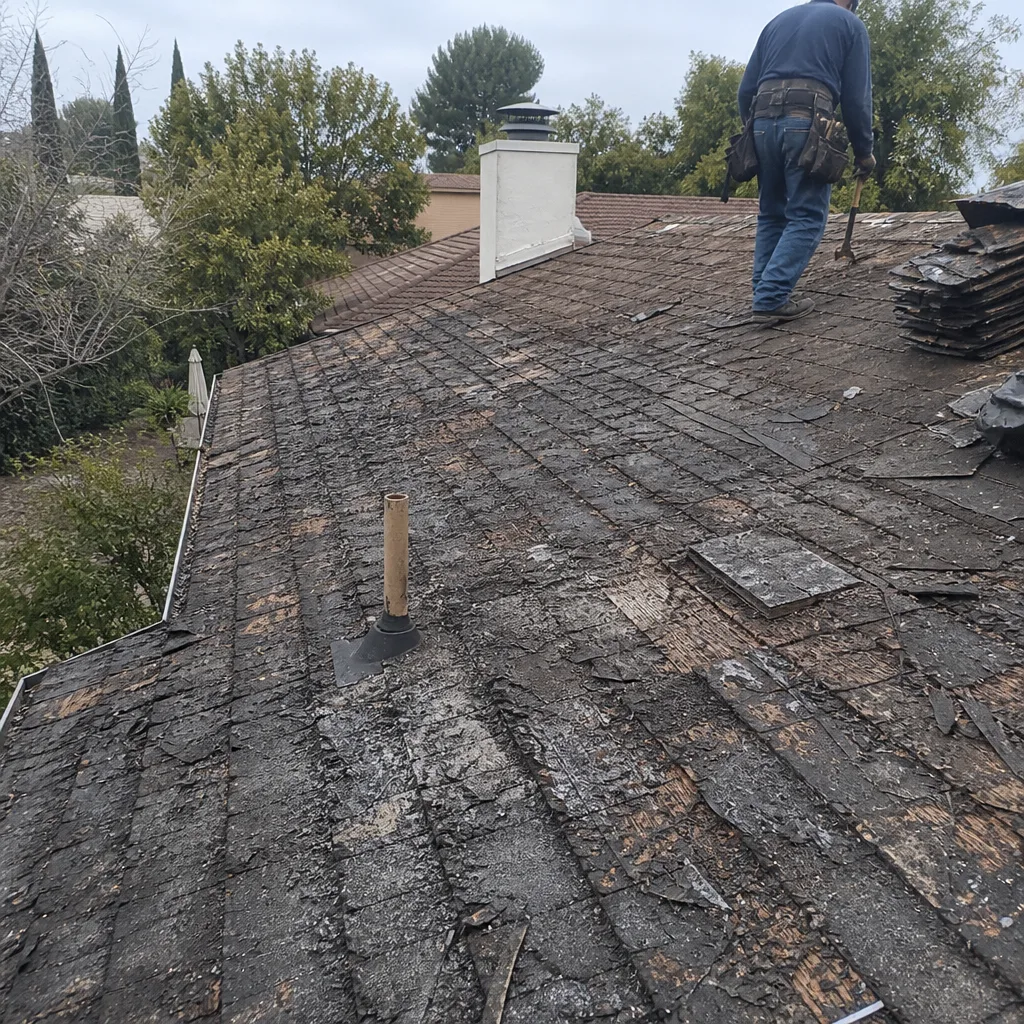 Before
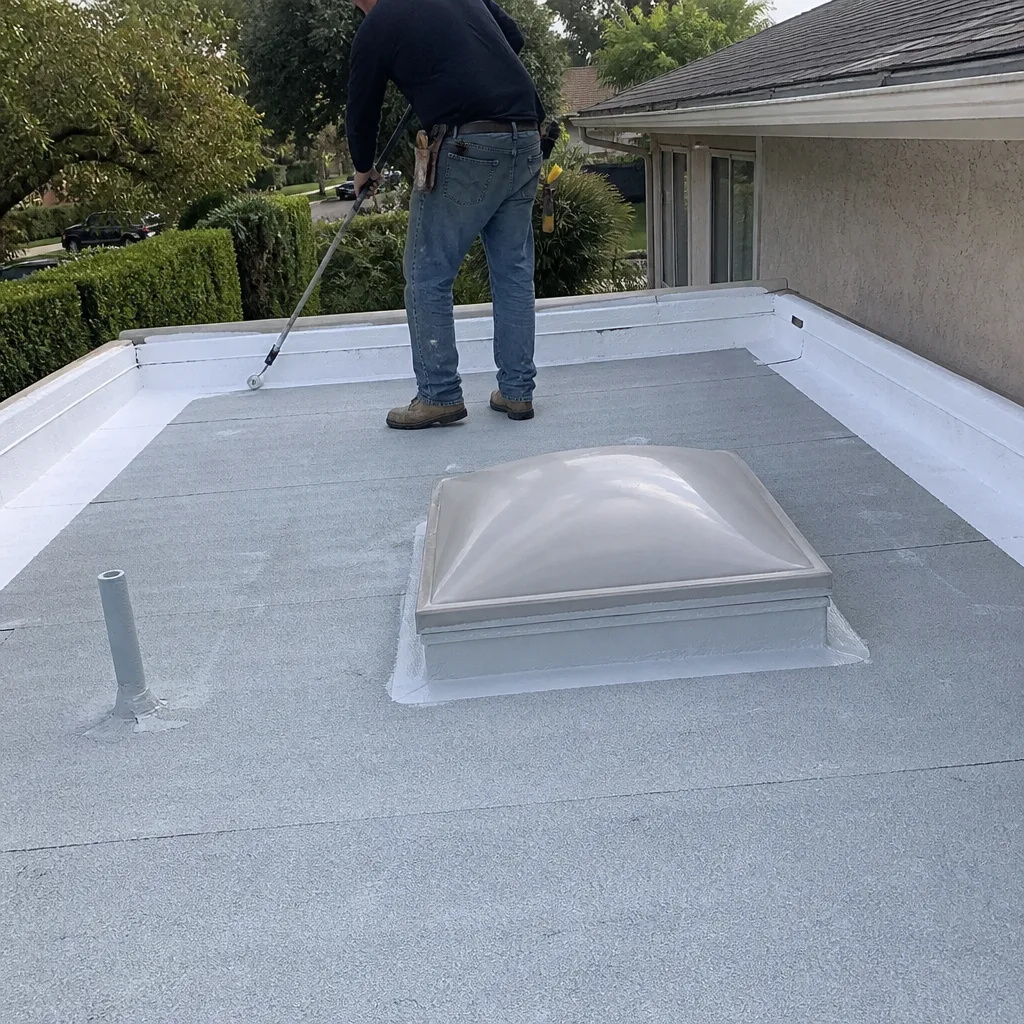 After
After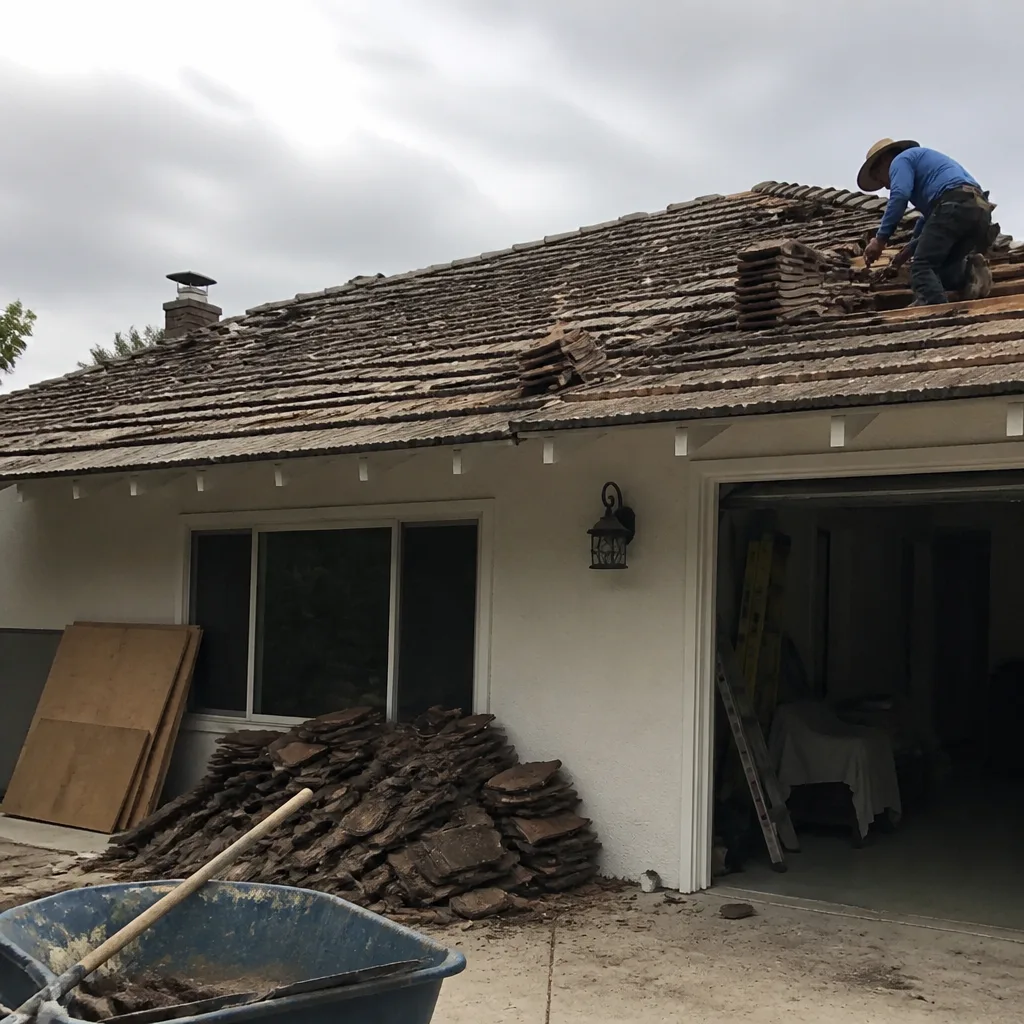 Before
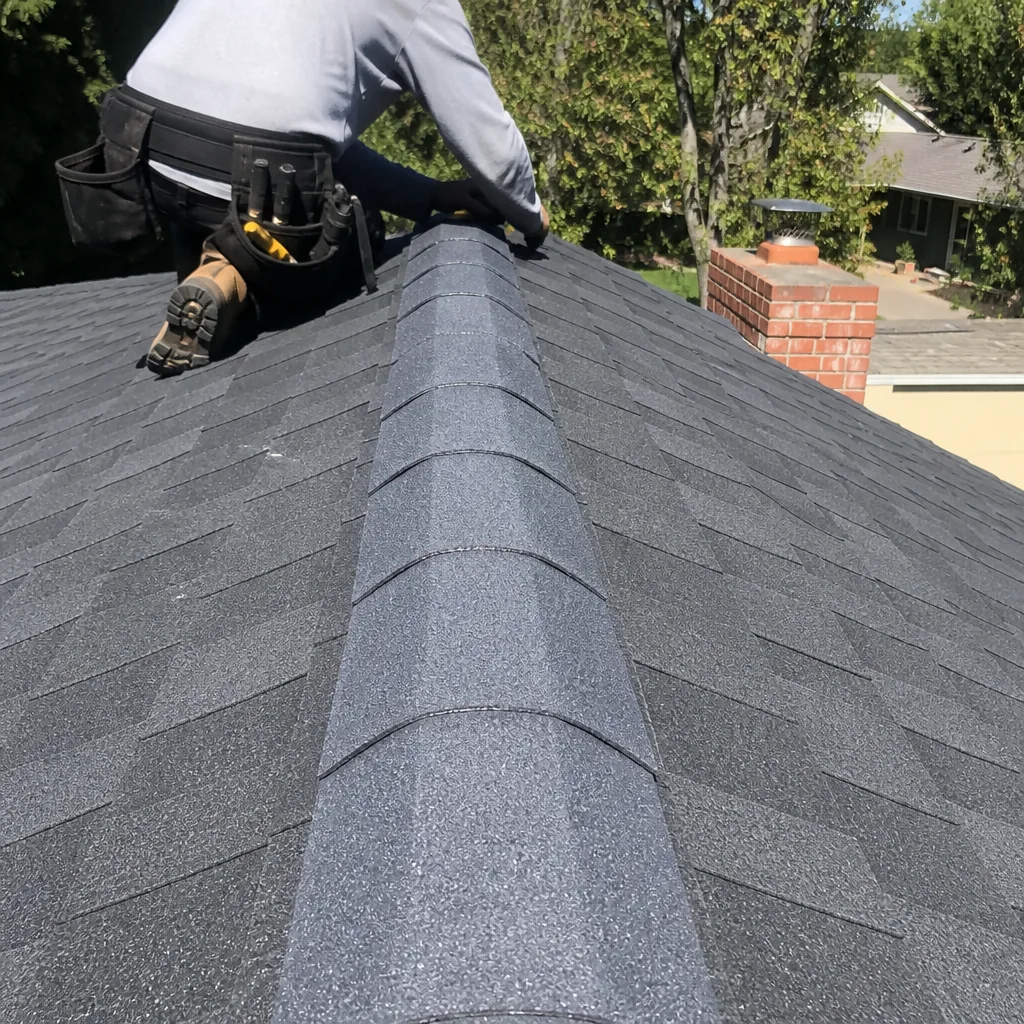 After
After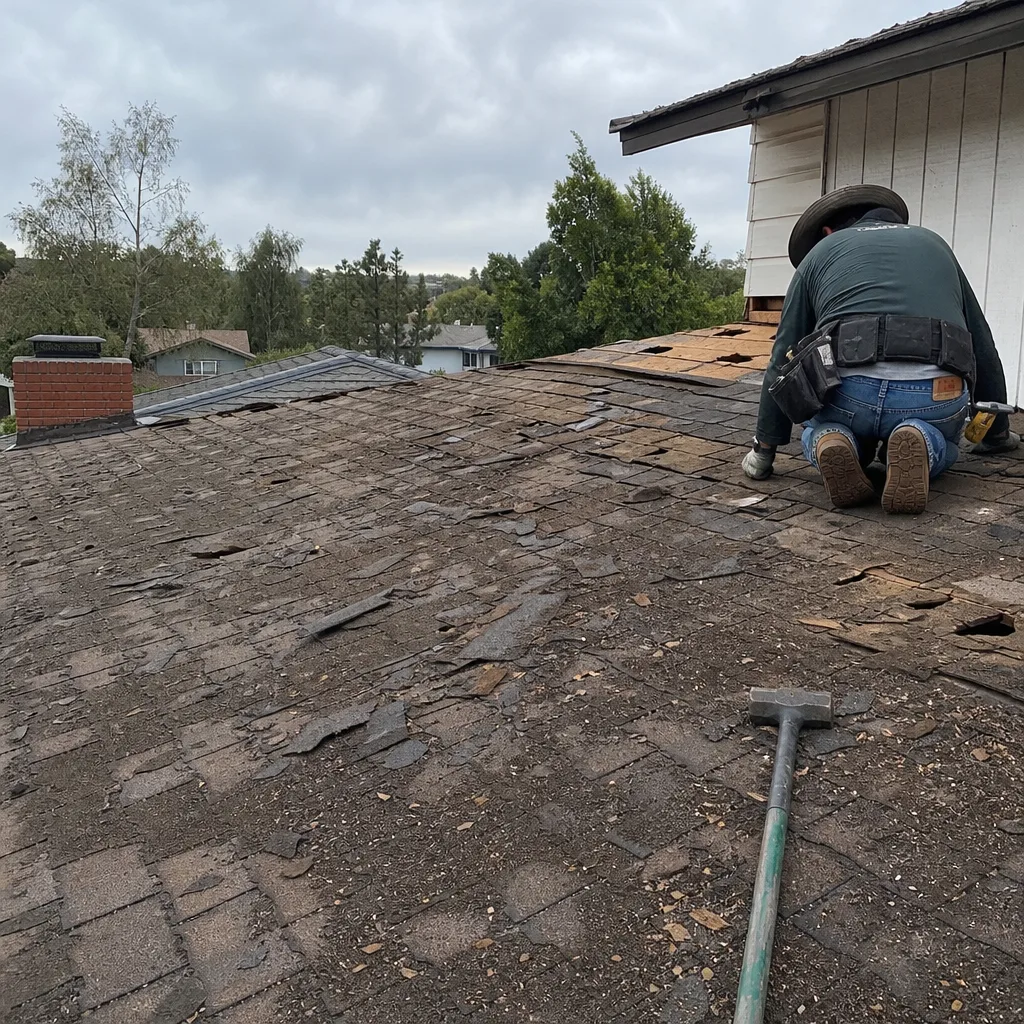 Before
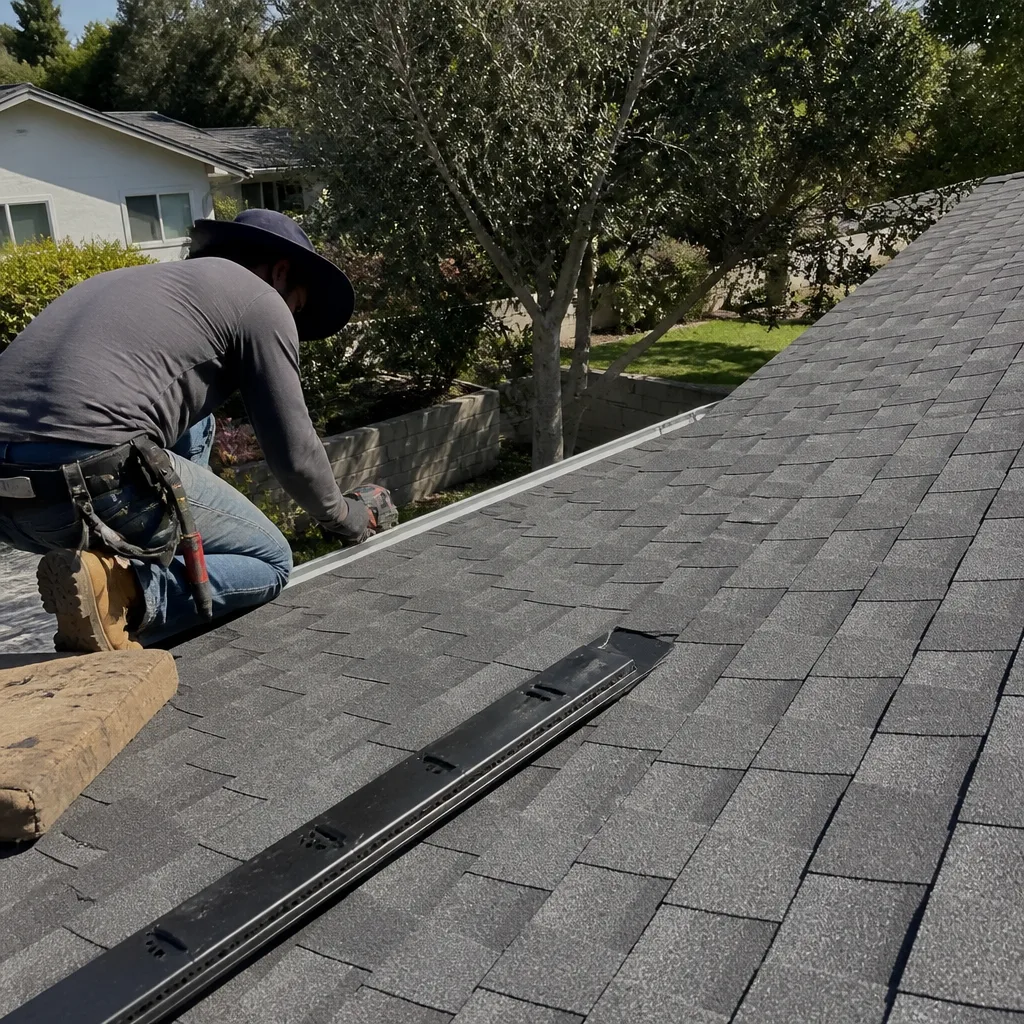 After
AfterReplacement Cost & What’s Included
For a standard single-story Woodland Hills home with 30 to 40 linear feet of ridge, expect a complete Tamko ridge vent replacement to run $850 to $1,400 installed. That includes removing the old vent and cap shingles, inspecting and repairing the decking underneath, installing the new Tamko-compatible vent section by section, sealing the end caps, and re-installing matched cap shingles.
What pushes the number higher: two-story access, steep pitches that require roof jacks and harness work, ridge lengths over 50 feet, or decking that shows rot and needs sections replaced. Before any work starts, you get a written price that covers parts, labor, and any decking repair we can see during the estimate. If we open the ridge and find hidden rot that changes the scope, we stop, photograph it, and get your sign-off before spending another dollar. That’s the Relay Standard, and it applies to every job in Woodland Hills.
DIY or Call Us?
A ridge vent replacement is not a high-tension repair like a garage spring, but it does require working along the highest point of your roof, and that’s a fall risk no homeowner should take lightly. If you want to diagnose the problem yourself, you can safely check for lifted cap shingles from the ground, inspect the vent ends with binoculars, and measure your attic temperature on a hot afternoon. That’s useful information when you call.
What you shouldn’t do is climb the roof, remove cap shingles, or attempt to reseal a cracked vent with caulk. The work requires matching the vent’s nail line to the roof’s decking, keeping shingle exposure consistent so water channels correctly, and making sure the end caps don’t become a critter entry point. One misplaced nail through a baffle and the vent’s airflow drops by half. Call us at (650) 456-5615, and we’ll bring the right Tamko sections on the first visit.
FAQs
A Tamko ridge vent in Woodland Hills typically lasts 12 to 18 years depending on sun exposure, with south-facing ridges on the shorter end of that range. If your home’s ridge gets reflected heat from a neighboring tile roof or stucco wall, expect accelerated UV breakdown. Call (650) 456-5615 for an inspection if your vent is past the 12-year mark.
In most cases, no. Individual Tamko vent sections can sometimes be patched when only one end cap is cracked and the rest of the run is under five years old, but the sections interlock, so a mid-run failure usually means replacing the entire length. We’ll always show you photos and give you a repair-versus-replace price before you commit.
A standard single-story ridge vent replacement in Woodland Hills takes four to six hours, including removing the old vent, prepping the decking, installing the new sections, and re-capping the shingles. Steeper roofs or longer ridges may push into a second day, but we’ll tell you the schedule before we start.
Yes, our Woodland Hills trucks carry Tamko 4-foot vent sections, end caps, and matching cap shingle profiles, along with compatible parts for GAF, Owens Corning, and CertainTeed systems. If your roof has a discontinued Tamko series, we’ll confirm the correct aftermarket match with you before anything is ordered or installed.
If your Tamko ridge vent is showing cracks, lifting shingles, or just not moving air like it used to, call Crestview Roofing Co Woodland Hills at (650) 456-5615. We’ll inspect the full ridge, write down the exact price, and schedule the work at a time that works for you. Every promise we make goes in writing, because a handshake doesn’t keep the rain out.
Written by Dylan Pace, Owner, Crestview Roofing Co Woodland Hills at Crestview Roofing Co Woodland Hills, serving Woodland Hills and nearby areas.