
Last updated October 17, 2026
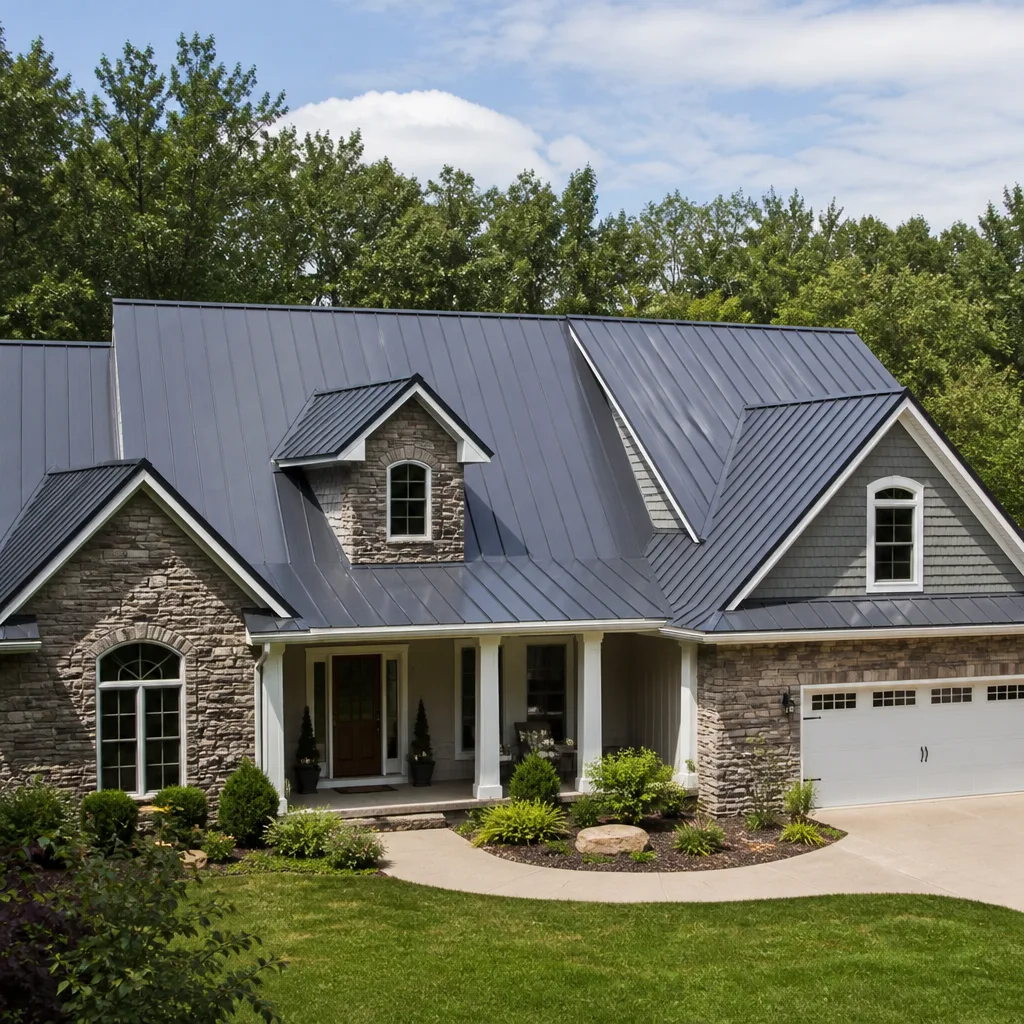 Metal roofing
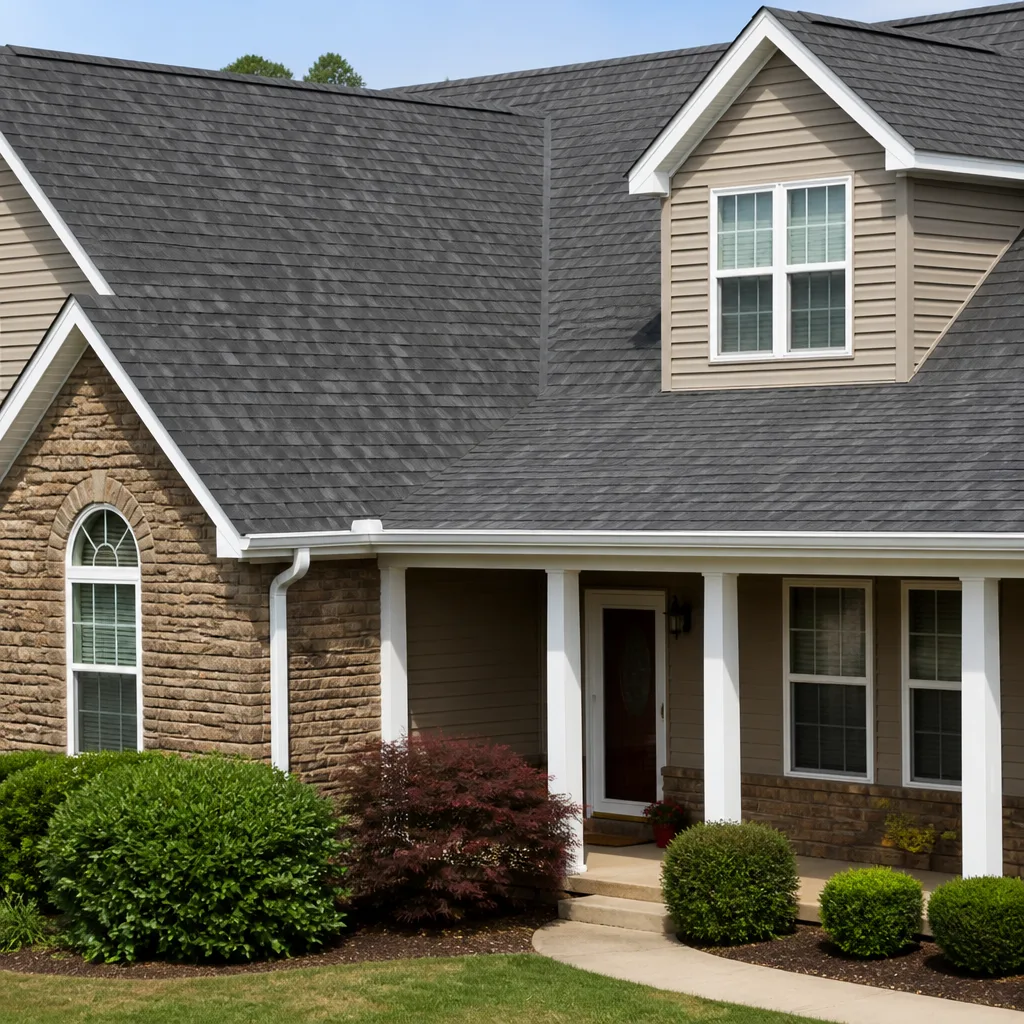 Architectural shingles
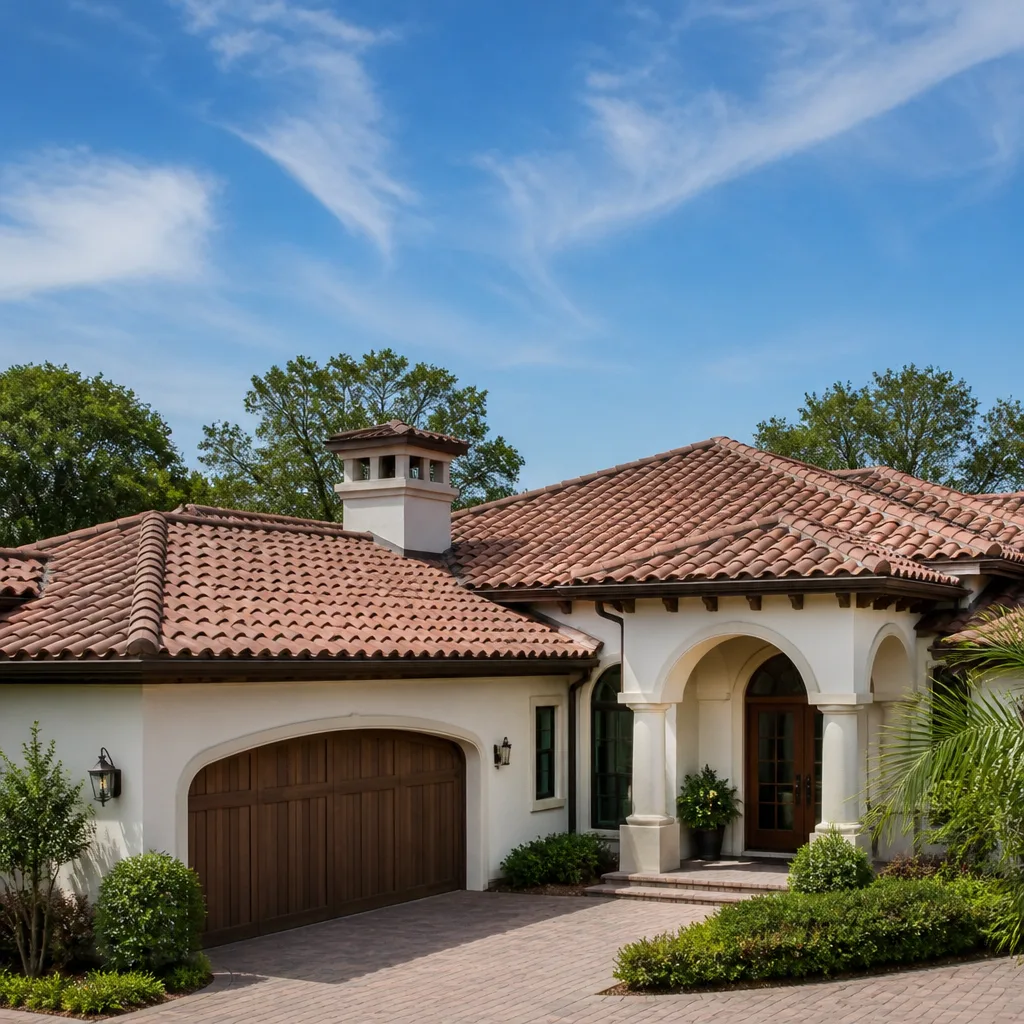 Tile roofing
 GAF
GAF Owens Corning
 Flat & low-slope
Free roof inspection with deck photos before we talk money - GAF and Owens Corning certified installation
Roofing Cost Breakdown: The Woodland Hills Homeowner’s Reference for 2026
The national average for a roof replacement gets quoted constantly, and it’s nearly useless for a homeowner in Woodland Hills. A 2,000-square-foot composition shingle job on a 6:12-pitch hillside home here costs materially more than the same job on a flat-lot tract home in the Valley floor, and almost no guide explains why. This one does. You’ll learn exactly what goes into a Woodland Hills roofing quote in 2026, what each line item should cost, which ones are negotiable, and which suspiciously low numbers are really a contractor telling you he plans to cut corners.
Quick Answer
A full roof replacement in Woodland Hills in 2026 typically runs between $11,000 and $24,000 for a standard composition shingle roof on a 2,000-square-foot home, with most falling in the $14,000 to $18,000 range. The gap between the low and high ends comes down to four variables: roof pitch, decking condition, material grade, and whether the contractor actually includes disposal, permits, and cleanup in the written quote. A roof repair, by contrast, usually runs between $350 and $1,400 depending on what failed.
Styles & brands we work with
Table of Contents
- Line-by-Line Breakdown of a Woodland Hills Reroof Quote
- How Roof Pitch Affects Labor Cost in Woodland Hills
- Why Disposal Costs Run Higher in LA County
- The Three Line Items Hidden in Low-Ball Quotes
- How to Compare Two Quotes on Equal Terms
- Material Grades: What the Brand Names Actually Mean
- How Long a Woodland Hills Reroof Takes
- Common Mistakes to Avoid
Line-by-Line Breakdown of a Woodland Hills Reroof Quote
Every roofing quote in Woodland Hills should be itemized. If you receive a single lump-sum number with no breakdown, you’re not comparing bids – you’re comparing vibes. Here’s what a legitimate written quote for a 2,000-square-foot composition shingle reroof should show, line by line, with 2026 price ranges for this market.
Tear-Off ($1,400 – $2,800)
Tear-off is exactly what it sounds like: the crew removes every existing shingle down to the wood deck. For a single-story home with a standard roof, this runs around $70 to $140 per square (a square is 100 square feet of roof area, so a 2,000-square-foot home has roughly 22 to 24 squares). In Woodland Hills, many homes have multiple roof planes, valleys, and dormers, which adds tear-off time and pushes the rate toward the high end. A two-layer tear-off – where a previous owner simply roofed over an old shingle layer – costs about 40% more because the crew handles double the material.
Disposal and Haul-Away ($350 – $800)
This line item covers the dumpster or debris trailer, plus the tipping fees at the landfill or transfer station. We’ll go deeper on this below, but the short version is LA County disposal costs run higher than the national average, and a quote that shows $100 or zero for disposal is a red flag.
Underlayment ($400 – $900)
Underlayment is the water-resistant barrier between the wood deck and the shingles. Standard 30-pound felt runs on the lower end; synthetic underlayment – which we recommend on hillside homes in Woodland Hills because it grips better on steeper pitches and holds up longer – runs $150 to $220 per square roll. Ice-and-water shield, a self-adhering membrane required in valleys and around penetrations by California building code, adds $60 to $100 per 200-square-foot roll.
Decking Inspection and Repairs ($0 – $1,600)
The wood deck underneath your shingles is the substrate everything fastens to. A legitimate quote includes an inspection, but no contractor can know the deck’s condition until the old roof is off. What a good quote shows is a per-sheet replacement price for any rotted or delaminating plywood or OSB, typically $85 to $125 per 4×8 sheet in 2026. A home with zero decking damage needs no additional spend; a home with water intrusion around a chimney or valley might need 4 to 10 sheets replaced. A quote that says “decking replacement included at no cost” is almost certainly charging you somewhere else for it.
Materials ($2,600 – $5,400)
For a 2,000-square-foot roof, architectural shingles from brands like CertainTeed, Owens Corning, IKO, and Atlas run roughly $110 to $240 per square, depending on grade. Standard architectural shingles sit near $110 to $140 per square; upgraded lines with better wind ratings and algae resistance run $160 to $240. The material line should also include starter strips, ridge cap shingles, ridge vents, and flashing – the metal strips that seal joints around chimneys, walls, and vents. On a Woodland Hills home with multiple valleys and a chimney, flashing alone can run $300 to $800.
Labor ($3,600 – $6,800)
Labor on a reroof typically accounts for 45% to 55% of the total job. Qualified crews in the San Fernando Valley charge $170 to $300 per square for installation. This is where roof pitch matters enormously, and we’ll cover that below. The labor line should also include the crew’s time for cleanup.
Permit ($300 – $600)
A reroof in Woodland Hills requires a permit from the Los Angeles Department of Building and Safety. The permit fee itself is typically $250 to $450, depending on roof area and valuation, and some contractors add a modest handling fee. A quote that excludes the permit or suggests “we can do it without one” is a problem. Unpermitted work can bite you at resale and can void your homeowner’s insurance coverage on roof-related claims.
Cleanup ($200 – $500)
The final line item covers magnetic sweeping for nails, blowing and raking the yard, and removing any debris that fell off the tarp. A legitimate cleanup line is modest. A missing cleanup line means you’ll find shingle nails in your driveway for the next year.
How Roof Pitch Affects Labor Cost in Woodland Hills
Roof pitch is the slope of your roof, expressed as a ratio. A 4:12 pitch rises 4 inches for every 12 horizontal inches. A 6:12 is noticeably steeper. A 9:12 or 10:12 is a true hillside roof, and Woodland Hills is full of them – especially in neighborhoods south of Ventura Boulevard where homes climb into the Santa Monica Mountains.
Here’s how the surcharge math works. A standard walkable roof – up to about 5:12 pitch – carries no labor premium. Crews can work standing up, staging materials is easy, and the job moves fast. From 6:12 to 8:12, most contractors add 10% to 15% on labor. Crews work on roof jacks and planks, every bundle of shingles gets carried up in smaller loads, and safety slows the pace.
Above 8:12, the surcharge climbs to 15% to 30%, sometimes higher. A 10:12 roof requires harnesses, rope work, and a slower, more deliberate crew. On the steepest Woodland Hills lots – think the ridge-line homes above Serrania Avenue – some roofers simply won’t bid, because the risk and equipment costs don’t pencil out for a standard crew.
What this means in dollars: the same 2,000-square-foot home that costs $14,000 to reroof on a 4:12 pitch will cost $15,400 to $16,100 on a 7:12 pitch, and $16,800 to $18,200 on a 9:12 or steeper. If you’re comparing two quotes, check whether both contractors actually visited the property. A quote from a roofer who never climbed your roof may not reflect your actual pitch.
Why Disposal Costs Run Higher in LA County
Disposal is the line item homeowners forget to budget for, and in LA County it’s structurally more expensive than nearly anywhere else in the country. Three things push the number up.
First, landfill tipping fees. LA County transfer stations and landfills charge $60 to $90 per ton for construction debris, and that number rises almost every year as the county pushes toward zero-waste targets. A full tear-off on a 2,000-square-foot roof generates 4 to 7 tons of debris.
Second, distance and traffic. The nearest transfer stations to Woodland Hills are in the west Valley – think Sun Valley and Sylmar – and a round trip with a loaded debris trailer can take two to three hours on the 101 or the 118. That’s crew time on the clock, and it lands on the disposal line or the labor line in some form.
Third, the state’s new organic waste and recycling rules add overage charges for loads that aren’t properly sorted. A contractor who separates shingles, wood, and metal before hauling pays a lower tip fee. A contractor who throws everything in one trailer pays a premium at the gate.
On a written quote, a realistic disposal line for a Woodland Hills reroof is $350 to $800. If a quote shows less than $200, either the contractor is absorbing the cost to win the job and will recover it elsewhere – or he plans to dump illegally. Neither is good for you.
The Three Line Items Hidden in Low-Ball Quotes
Every low-ball quote has a story to tell. Here are the three omissions we see most often in Woodland Hills, and what they look like when the final invoice arrives.
1. Permits
The permit line disappears from the quote. The contractor tells you not to worry about it, or says the job is “repairs, not replacement,” so no permit is needed. Then the roofer does a full tear-off and reroof without a permit, and you now have unpermitted work on your home’s record with the city of Los Angeles. When you sell, the buyer’s inspection flags it.
2. Decking replacement
The quote says “decking replacement if needed” with no per-sheet price attached. The roof comes off, the crew finds eight sheets of rotted plywood, and suddenly there’s a change order for $1,000 added to the job. You have no leverage to question it because you agreed to “if needed” with no rate listed. A legitimate quote gives a per-sheet price up front, in writing, before work starts.
3. Repairs to the structure beneath the roof
Fascia boards, rafter tails, and drip edge often show damage during a tear-off, especially on older Woodland Hills homes that haven’t had the roof touched in 25 years. The low-ball quote doesn’t mention them. The mid-job change order does. The fix is to ask every bidder: “Does this quote include fascia, drip edge, and rafter tail repairs, and if so, at what rate?” If the answer is unclear, move on.
What separates a good contractor from a cheap one is whether these unknowns are surfaced before you sign, with a price attached. At Crestview Roofing Co Woodland Hills, we put a written price in front of every customer before any work starts, and that number is the number on the invoice – no change-order games. Our Crestview Roofing Co Woodland Hills home has more details on how that process works.
How to Compare Two Quotes on Equal Terms
Comparing quotes is less about the bottom line and more about the scope. Two roofers can quote $14,200 and $17,800 for the same home, and the cheaper one can actually be worse. Here’s a five-step process for comparing bids apples to apples.
- Check the square count. Each quote should state the roof area in squares. If one quote assumes 22 squares and the other assumes 26, the cheaper one may have under-measured – or the pricier one may be padding. Ask each contractor to explain their measurement.
- Verify the scope lines. Tear-off, disposal, underlayment, decking per-sheet price, materials, labor, permit, cleanup. All eight lines should be present. Missing lines means hidden change orders.
- Confirm material brand and grade. “40-year architectural shingle” isn’t a brand. Ask for the manufacturer and the product line. A quote with CertainTeed Landmark shingles is specific; a quote that says “premium shingle” is not.
- Check the decking per-sheet price. Both quotes should list a specific dollar amount per 4×8 sheet. If one contractor doesn’t list it, that quote is incomplete by design.
- Ask about the warranty in writing. A verbal warranty is a wish. A written warranty – what it covers and for how long – is a commitment. Every repair we do at Crestview Roofing is covered by our 365-Day Done Right Promise, in writing, with a free second visit if the repair fails.
When the scope lines match, the final number comparison is fair. When they don’t, the cheaper quote is probably cheaper because it does less.
Material Grades: What the Brand Names Actually Mean
Most Woodland Hills reroofs use architectural asphalt shingles from one of four major manufacturers: CertainTeed, Owens Corning, IKO, or Atlas. All four make good products. The real question is grade, because each manufacturer offers entry, mid, and premium tiers that differ in weight, wind rating, algae resistance, and warranty length.
Entry grade – roughly $110 to $140 per square. These are solid shingles with 25- to 30-year warranties. They’re perfectly adequate for a flat-lot rancher with a simple roof. What they lack is impact resistance and the more dimensional look of heavier shingles.
Mid grade – $140 to $190 per square. These add better wind ratings, typically 110 to 130 mph, and a more layered appearance. For most Woodland Hills homes, this is the sweet spot. The climate here is forgiving – no hail, no snow, mild winters – but the Santa Ana winds in the fall put real stress on roofs, and a higher wind rating matters on a hillside exposure, as we cover in our Seasonal Roofing Care for Woodland Hills: Year-Round Homeowner’s Guide.
Premium grade – $190 to $280 per square. These are the heaviest shingles with the longest warranties, often 50 years with wind ratings up to 130 mph or higher. They make sense on a forever home where the next roof is someone else’s project 40 years from now. They don’t pencil out on a flip or a rental.
We work with all the major brands, including CertainTeed and Owens Corning, because every home has a different budget and exposure. But we tell customers the same thing: the material grade matters less than the decking underneath it and the crew installing it. A $280-per-square shingle on a rotten deck is still a roof that fails.
How Long a Woodland Hills Reroof Takes
Most tear-off and reroof jobs in Woodland Hills take 3 to 7 working days, depending on size, pitch, and weather. A simple 1,500-square-foot roof on a low pitch takes 2 to 3 days. A 3,000-square-foot hillside home with multiple valleys, steep pitches, and a chimney or two takes 5 to 7 days. Tile roofs and standing-seam metal roofs run longer.
Caution: a contractor who promises a one-day reroof on a large home is cutting something. Either the crew is too big for its own management, the tear-off is sloppy, or the inspection step is being skipped. Our Roof Replacement in Woodland Hills guide goes deeper into what a proper replacement timeline looks like.
If you’re weighing repair versus replacement, the same variables apply. A targeted repair – a replaced vent boot, a re-flashed chimney, a patched section of shingles – usually takes one to two hours on site. Our Roof Repair in Woodland Hills page covers typical repair scopes and what they cost in this market.
New construction and additions follow a different schedule entirely. If you’re building or adding on, our Roof Installation in Woodland Hills guide walks through what a new roof system involves from deck up.
Key Takeaways
- A full reroof in Woodland Hills in 2026 runs $11,000 to $24,000, with most 2,000-square-foot homes landing between $14,000 and $18,000.
- Roof pitch is the single biggest local variable. Hillside homes above 8:12 pitch carry a 15% to 30% labor surcharge over flat-market estimates.
- Every legitimate quote has eight line items. If any are missing, the contractor plans to recover that money as a change order.
- Disposal in LA County costs $350 to $800 on a typical reroof for structural reasons – high tipping fees, long hauls, and sorting rules.
- The per-sheet decking price must be stated in writing before tear-off. If it’s not, you gave the roofer a blank check.
- Material brand matters less than grade. Entry, mid, and premium tiers from the same manufacturer differ in wind rating, weight, and warranty length.
Common Mistakes to Avoid
- Signing a lump-sum quote with no breakdown. You can’t verify what you can’t see. A single number with no line items means you’re trusting the contractor’s memory of what was discussed, and that memory will be expensive.
- Choosing the lowest bid without checking scope. The low bid is usually low because it omits permits, decking allowance, or disposal. The gap between low and mid bids is often exactly what the low bidder plans to add later.
- Skipping the permit. Unpermitted reroofs are a liability at resale and can complicate an insurance claim. The permit costs $300 to $600 and protects you far more than it costs.
- Ignoring the decking, the underlayment, and the flashing. These three components do more to keep water out of your home than the shingles themselves. A quote that splurges on shingles and skimps on underlayment is a roof that leaks in exactly the places you can’t see.
- Not asking for the warranty in writing. Every roofer says the work is guaranteed. Few mean it enough to put it on paper. Get the guarantee in writing, with the duration and what’s covered.
- Waiting until the roof fails completely. A repair that costs $800 today can become a $5,000 structural problem in two rainy seasons. Woodland Hills gets most of its water between November and March, and a small leak during those months is doing real damage under the surface.
See the difference
 Before
 After
After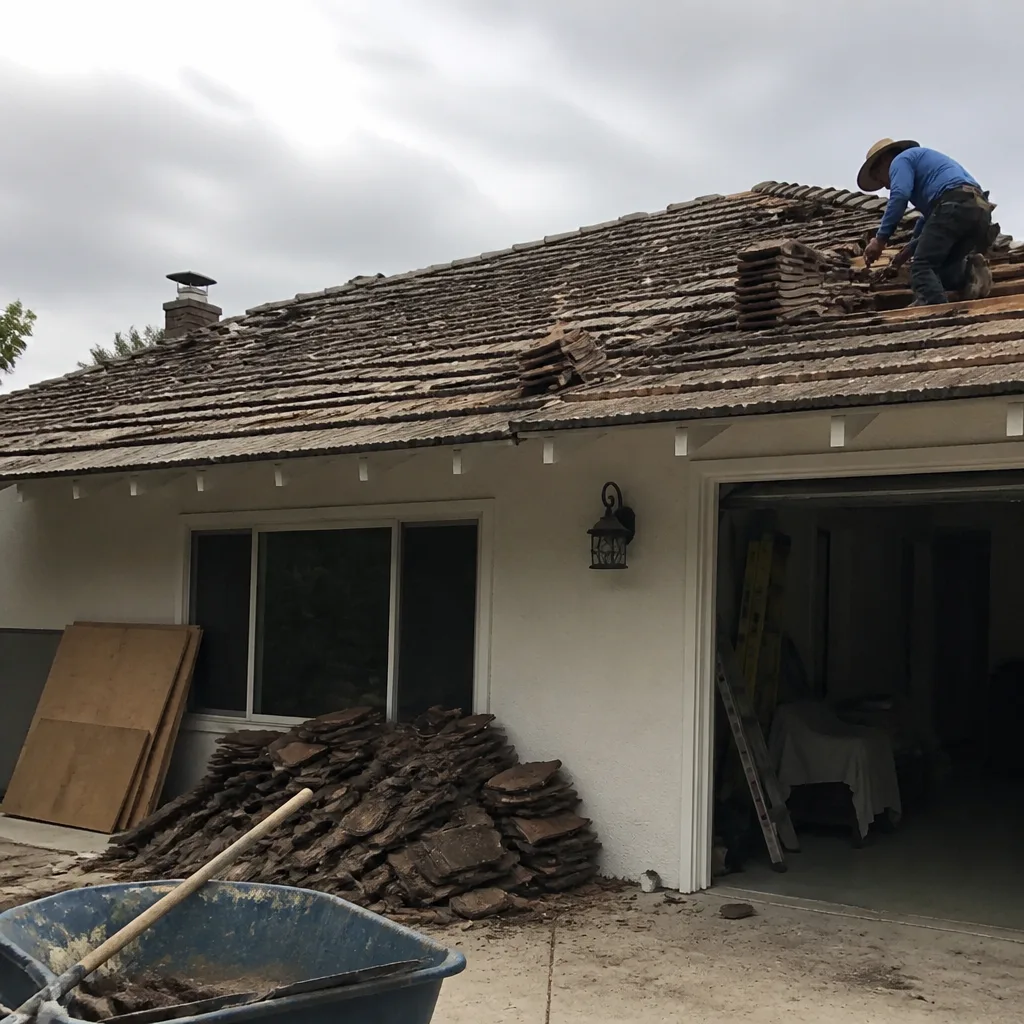 Before
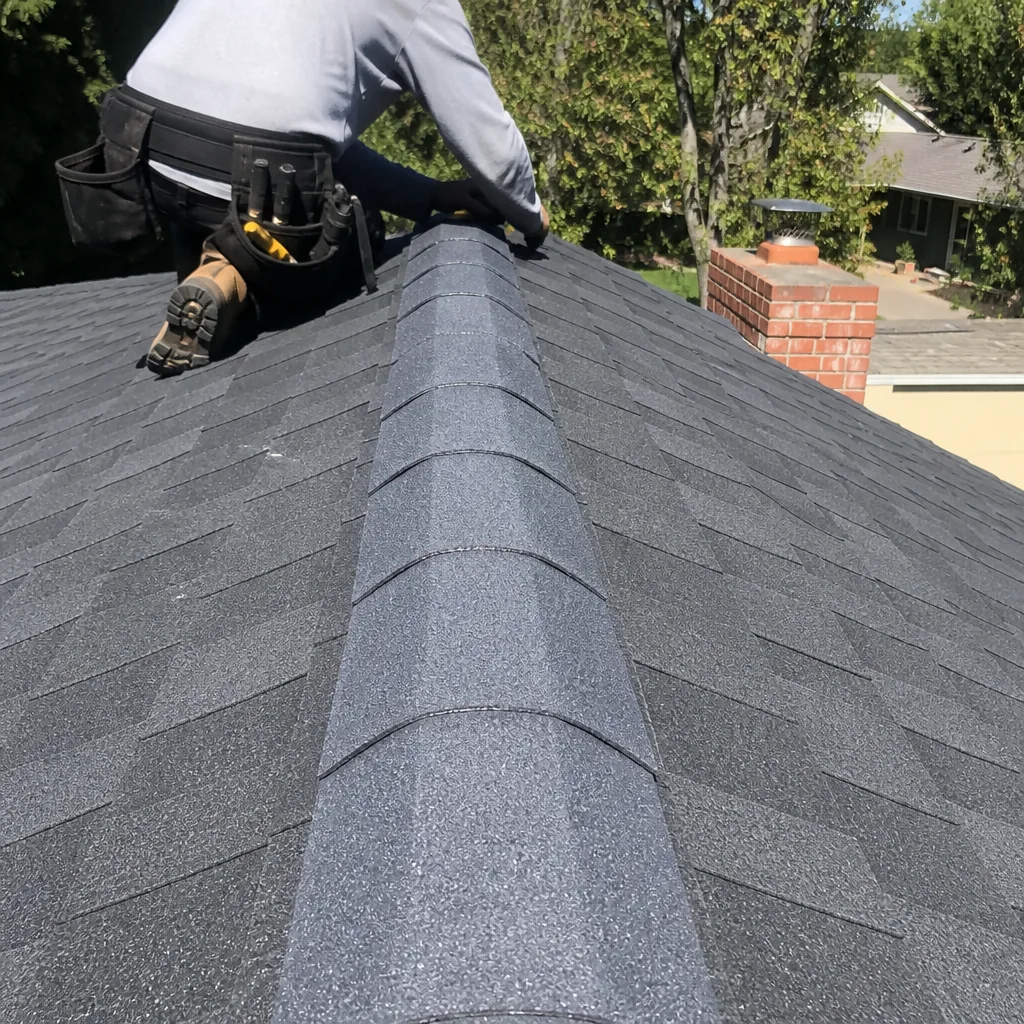 After
After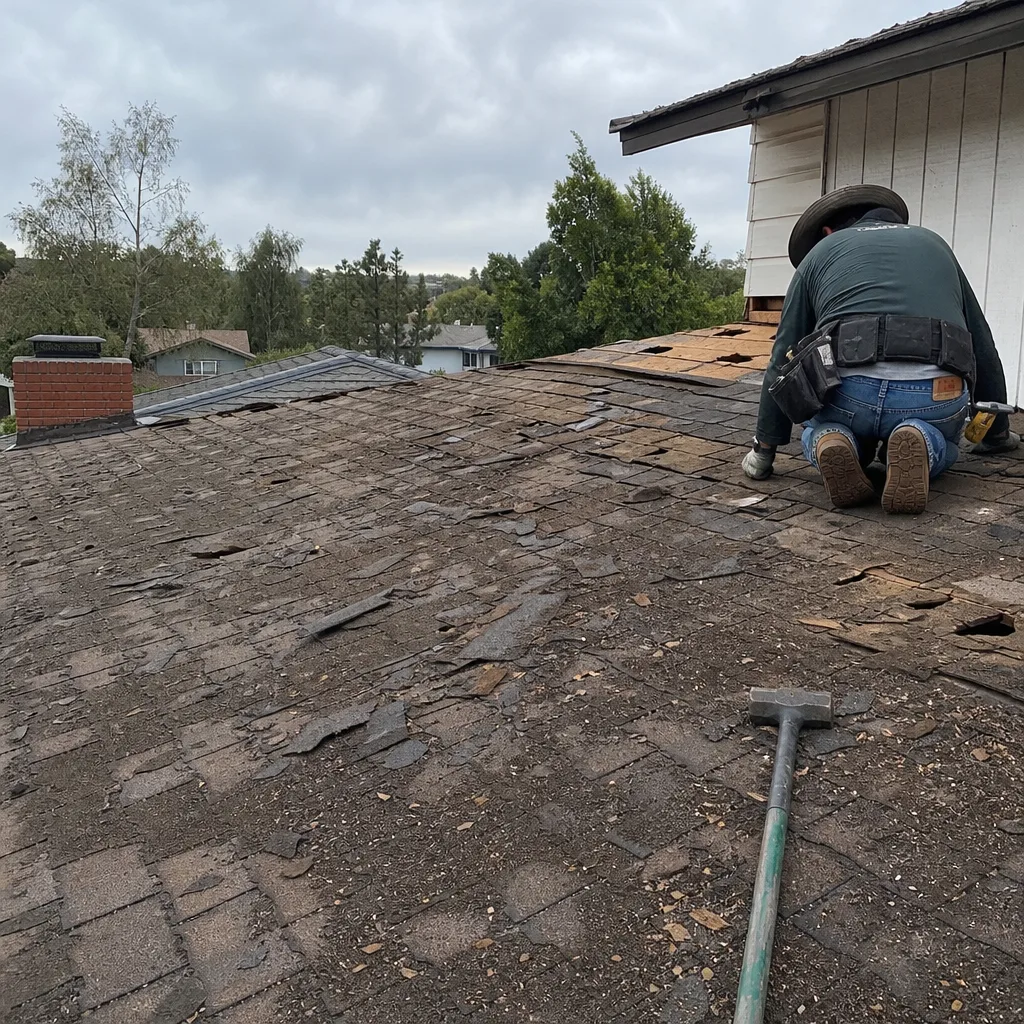 Before
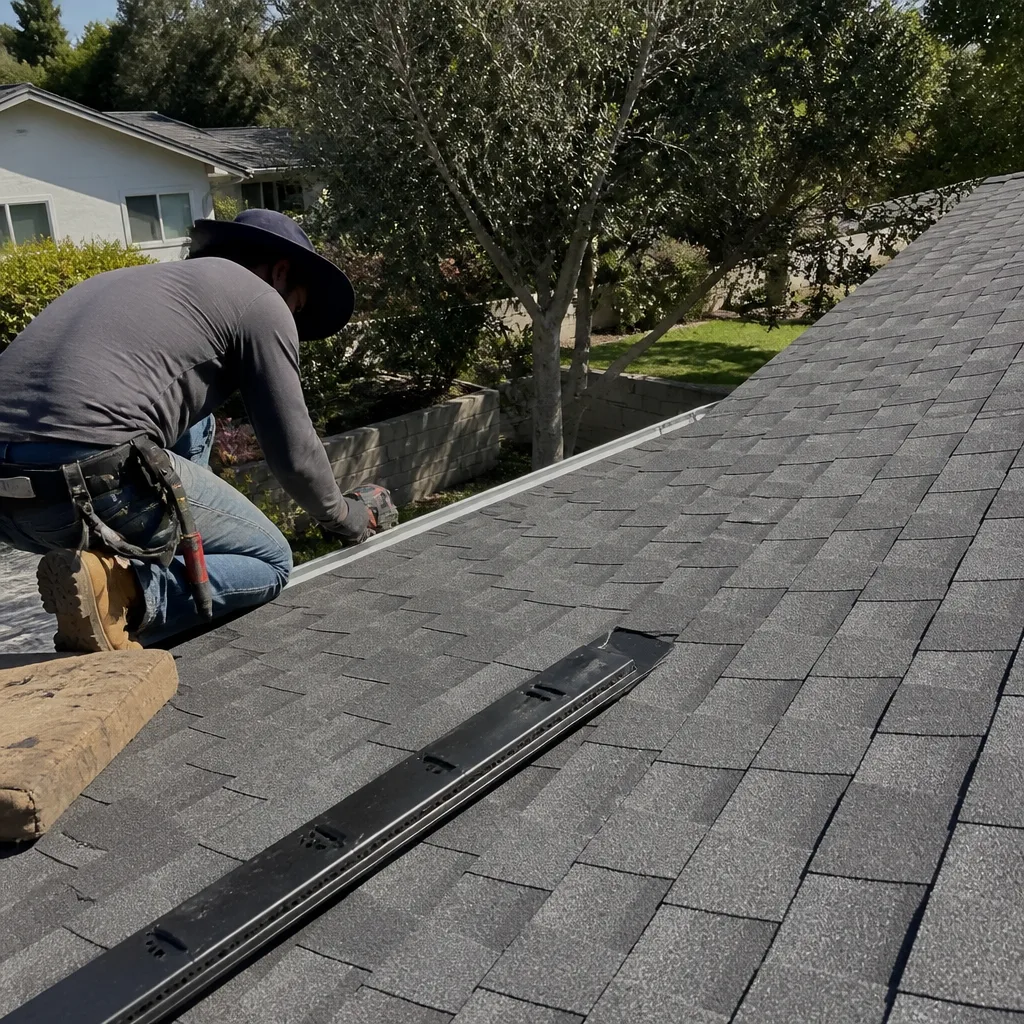 After
AfterWhen to Call a Professional
A roofing project is not a place for weekend experimentation. If you see water stains on a ceiling, shingle granules collecting in gutters, lifted or missing shingles, or daylight coming through gaps in the roof deck, call a roofer. The same applies if your home is nearing 20 years on its current roof and you’re planning to sell – a roof’s remaining life is one of the first things a buyer’s inspector assesses, and a failed roof can knock 5% to 10% off the sale price. Crestview Roofing Co Woodland Hills offers free estimates throughout Woodland Hills – call (650) 456-5615 to schedule yours. A written price before any work starts, with before-and-after photos and a trackable arrival time, is the standard we operate by, and you can find more guides & resources on our blog.
Frequently Asked Questions
A full roof replacement in Woodland Hills in 2026 typically costs $11,000 to $24,000 for a composition shingle roof, with most 2,000-square-foot homes landing between $14,000 and $18,000 before any decking surprises are discovered. Pitch, material grade, and the condition of the existing decking are the main variables. Call (650) 456-5615 for a free estimate with a written line-by-line quote.
Hillside homes in Woodland Hills carry higher labor costs because steeper roof pitches slow down crews, require safety equipment, and add material staging time – a 15% to 30% surcharge above 8:12 pitch is normal. Homes on the Valley floor with low-pitch roofs don’t carry that premium. Your roof’s pitch is the single biggest local variable in the price.
Most roof repairs in Woodland Hills run between $350 and $1,400 depending on what failed, with simple vent boot replacements on the low end and chimney re-flashing or valley repairs on the high end. Every repair we complete at Crestview Roofing is covered by our 365-Day Done Right Promise, in writing, at no extra cost.
Not if the quote is complete. The only legitimate unknown on a reroof is the condition of the wood deck underneath, which no one can see until the old roof is off. A good contractor states a per-sheet decking replacement price in writing up front. A bad contractor leaves it vague and sends a change order. Ask for the per-sheet price before you sign anything.
Yes. The city of Los Angeles requires a permit for a reroof, and a legitimate contractor will include it as a line item in the quote. A contractor who suggests skipping the permit saves you $300 to $600 now and creates a disclosure problem at resale later. It’s not a good trade.
Most tear-off and reroof projects take 3 to 7 working days, depending on the size of the roof, the pitch, and the number of valleys and penetrations. A simple low-pitch roof on a 1,500-square-foot home finishes in 2 to 3 days; a large hillside home with steep pitches and multiple chimneys takes closer to a week. Call (650) 456-5615 to ask about timelines for your specific home.
The Bottom Line
A roof is one of the few purchases where the price you’re quoted and the price you pay should be identical – if the quote is honest and complete. In Woodland Hills, the real cost drivers are pitch, decking condition, and disposal fees, not the brand name on the shingle. Get your quote itemized, verify the per-sheet decking rate, confirm the permit line, and ask for the warranty on paper. A roofer who can’t put these in writing before work starts isn’t someone you can trust to finish the job.
Written by Dylan Pace, Owner at Crestview Roofing Co Woodland Hills, serving Woodland Hills since 2000.