
Last updated October 17, 2026
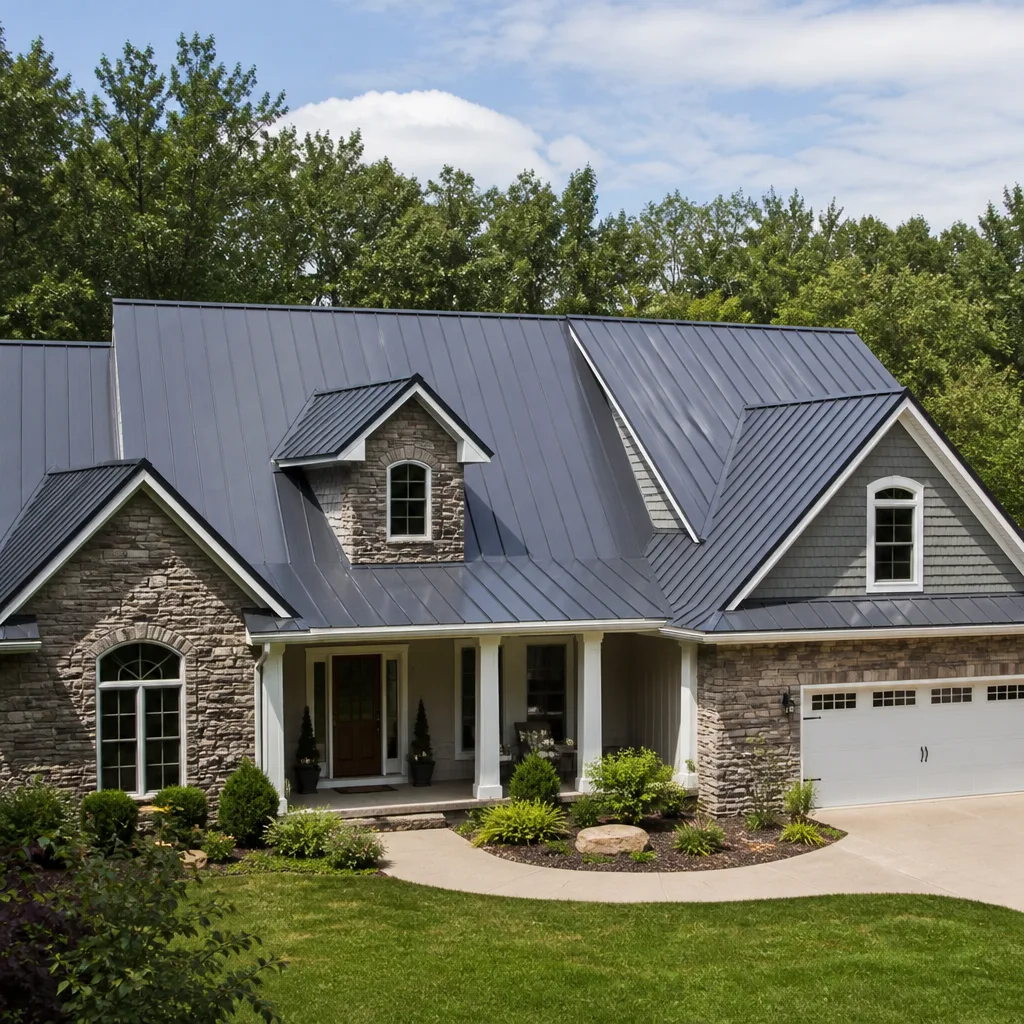 Metal roofing
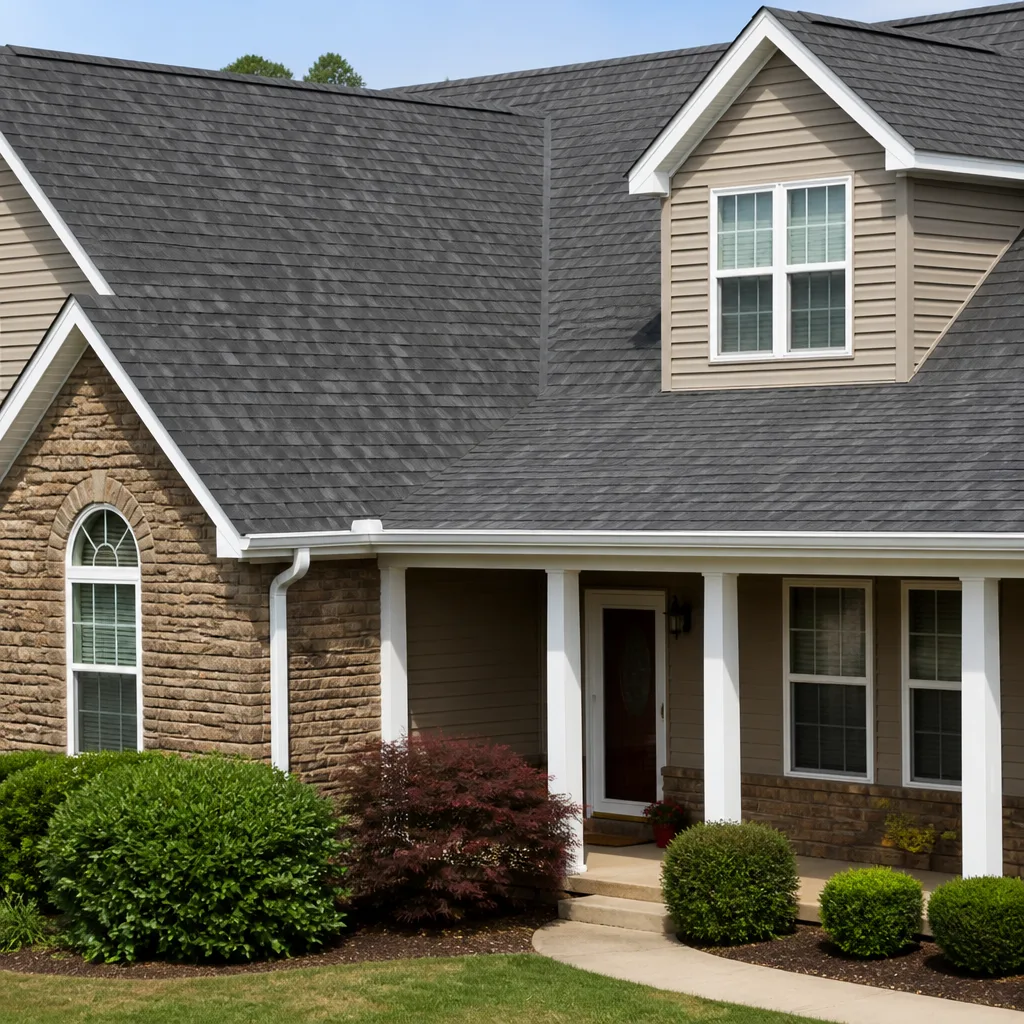 Architectural shingles
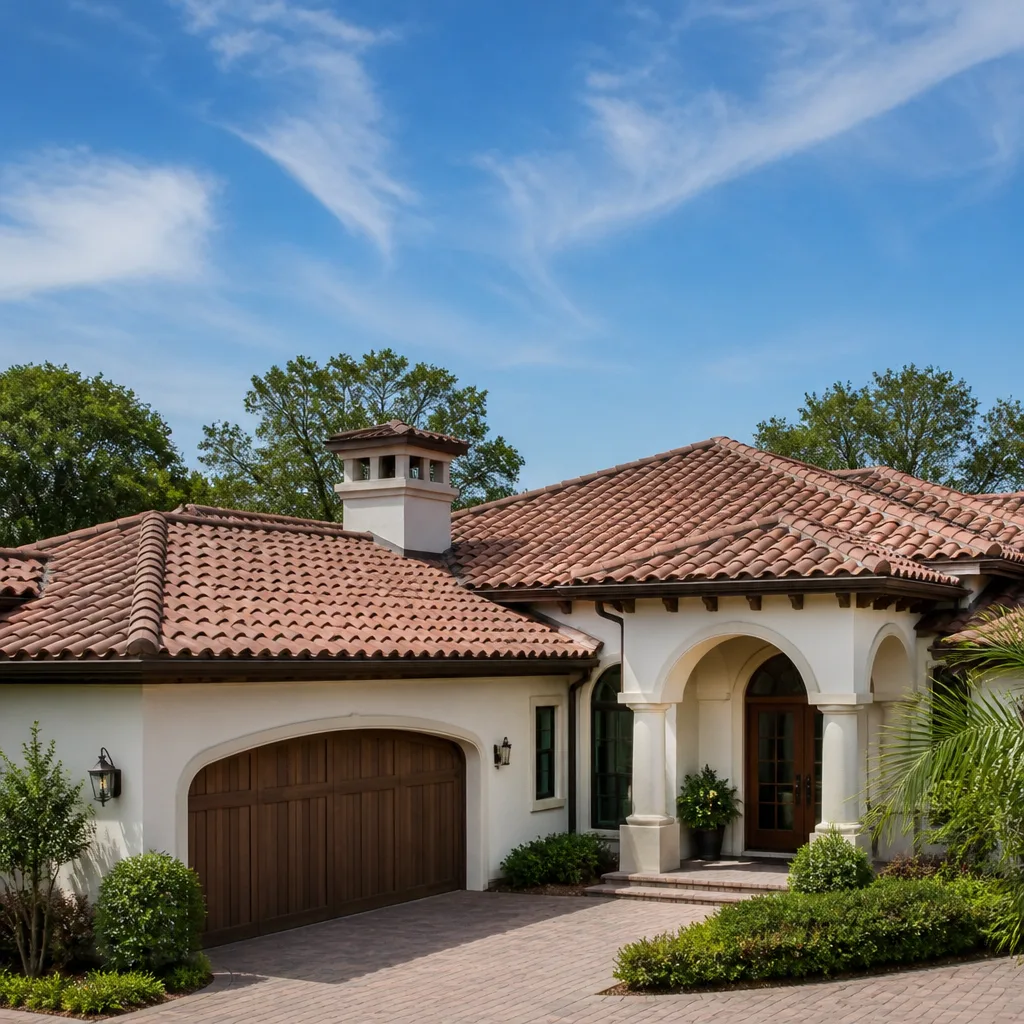 Tile roofing
 GAF
GAF Owens Corning
 Flat & low-slope
Free roof inspection with deck photos before we talk money - GAF and Owens Corning certified installation
Roofing Permits, Codes & Inspections in CA: What You Need to Know
Most homeowners in Woodland Hills only think about roofing permits twice: when a contractor quotes them a line item for the permit fee, and when they’re sitting in escrow and a title company flags unpermitted work. The surprise most people don’t see coming is that both moments are connected, and they usually involve the same roof. This guide explains what actually triggers a permit in California, where the repair-versus-reroof line sits, what inspectors look for, and how to fix a permit problem before it costs you a sale. For more context, see our The Complete Guide to Roofing in Woodland Hills.
Quick Answer
In California, a roofing permit is required when you’re replacing the underlying roof covering (a reroof), but most spot repairs under a certain square footage threshold do not require one. Missing permits can void insurance coverage for fire and wind damage, derail a home sale, and require retroactive permitting that costs far more than the original fee. The exact trigger is defined by California Building Code and interpreted differently by LA County and City of LA jurisdictions.
Styles & brands we work with
Table of Contents
- What Triggers a Roofing Permit in California
- California Building Code: The Square Footage Line
- Los Angeles County vs. City of Los Angeles Permits
- Title 24 Cool Roof Compliance and Inspections
- What a Final Inspection Actually Checks
- Retroactive Permitting for Unpermitted Roofs
- What Unpermitted Roofing Costs Woodland Hills Homeowners
- Permits and Your Homeowners Insurance
What Triggers a Roofing Permit in California
The state sets the baseline, and local jurisdictions layer on top of it. California Building Code (CBC) Section 105.1 requires a permit for any work that involves “re-roofing” – which means removing and replacing the roof covering itself. But the language gets specific fast. A permit is not triggered by the dollar amount of the job, the number of shingles being replaced, or whether you’re switching material types. It’s triggered by how much of the roof’s surface area is being disturbed, and by whether the structural deck beneath it is being touched.
Here’s what this looks like in practice. If a Woodland Hills home loses 15 shingles in a Santa Ana wind event and a roofer replaces those shingles, that’s a repair. No permit. If the same home has a failed underlayment across an entire roof plane and the contractor strips 2,000 square feet of shingles down to the deck, that’s a reroof. Permit required. The distinction matters because both jobs might be called “roof repair” on an invoice, but only one of them creates a paper trail with the building department.
In our experience working in Woodland Hills and surrounding neighborhoods like Winnetka and Canoga Park, the homeowners who get surprised are almost always the ones whose contractor used the word “repair” loosely. A 900-square-foot section of a roof in Walnut Acres that gets completely stripped and re-shingled is a reroof in the eyes of LA County, even if the rest of the house was untouched. Most standard repairs run $550 – $1,200 depending on materials and access. A permitted reroof typically runs $9,000 – $18,000 for an average Woodland Hills home. The permit fee itself is often only 1.5% to 3% of the project cost, which is why skipping it is such a costly mistake.
California Building Code: The Square Footage Line
This is the section where most online guides get vague, so let’s be precise. The California Building Code does not state a single universal square footage number that separates a repair from a reroof. What it states is that a permit is required when the roof covering is replaced. Local jurisdictions then define what “replaced” means in practice.
Here is how the relevant authorities in the Woodland Hills area interpret it:
Los Angeles County Building and Safety: A permit is required when 10% or more of the roof covering on a building is being replaced within a 12-month period. That’s the operative number: 10% of the roof’s total surface area. For a typical 2,000-square-foot roof, that means 200 square feet. Anything at or above that threshold in a rolling 12-month window, and you need a permit.
City of Los Angeles Department of Building and Safety (LADBS): LADBS uses the same 10% threshold in its roofing permit guidelines, but with stricter documentation requirements. The city wants a roof plan showing the scope of work, and it will check the square footage calculation during plan review. If two separate “repairs” on different roof planes add up to more than 10% within 12 months, the city treats it as one reroof.
The practical takeaway for homeowners: don’t think in dollar amounts, and don’t think in “how bad is the leak.” Think in square feet of disturbed roofing. A contractor who quotes you a $2,500 repair that involves stripping 400 square feet of shingles is quoting a job that legally requires a permit. A contractor who quotes a $4,000 repair on a steep slope involving only 150 square feet is not. Same roof, same house, different legal obligations.
Los Angeles County vs. City of Los Angeles Permits
Woodland Hills sits in a jurisdictional gray zone that confuses even experienced contractors. Most of Woodland Hills is governed by the City of Los Angeles and falls under LADBS. But certain pockets, particularly along the western edges near Calabasas and Hidden Hills, fall under Los Angeles County’s jurisdiction. The determining factor is the property’s legal address and which entity appears on your property tax bill.
Here’s how to determine which jurisdiction covers your address:
- Look at your property tax bill. If the “Assessor” line says “Los Angeles County” and you live in the 91364 or 91367 ZIP, you’re still likely under City of LA jurisdiction – the county assesses property taxes for all 88 cities within it. This step alone doesn’t answer the question.
- Search LADBS’s online permit database. Enter your address. If it returns a record, you’re under City of LA jurisdiction. If it says “not found,” check the LA County Building and Safety permit portal next.
- Call the building department. Both offices answer the phone during business hours. The question to ask is: “Is my address under City of LA or County jurisdiction?” Have your APN (Assessor Parcel Number) ready.
- Ask your roofer to verify. A contractor working in Woodland Hills should be able to tell you which permit counter they’ll be pulling from, and should have done so in writing in your estimate.
The practical difference matters. LADBS requires a licensed contractor or owner-builder to pull the permit, takes 1 – 3 business days for plan review on a standard reroof, and charges a fee based on project valuation. LA County is often faster for simple reroofs but has stricter Title 24 documentation requirements. A roofer who pulls from the wrong jurisdiction will get rejected at inspection, and you’ll be the one waiting an extra week while the paperwork gets sorted out.
Roof Replacement in Woodland Hills requires this determination early, before materials are ordered, because permit turnaround affects the start date. Our estimates include the permit line as a separate item so you can see exactly what the city is charging, and we’ll tell you which jurisdiction applies to your address.
Title 24 Cool Roof Compliance and Inspections
California’s Title 24 energy code applies to reroofs, and it’s enforced at inspection. The rule is simple: when you replace the roof covering on a residential building, the new roof must meet cool roof standards unless the building is exempted. A cool roof is one that reflects more sunlight and absorbs less heat than a standard roof. It’s measured by a value called solar reflectance index, or SRI.
For most pitched residential roofs in Woodland Hills, the code requires the roofing material to have a minimum three-year aged SRI of 16, or a CRRC (Cool Roof Rating Council) rating that meets the standard. Most modern asphalt shingles from manufacturers like GAF, CertainTeed, and Owens Corning have cool roof versions that meet this requirement. But not every shingle line does. A dark gray or black traditional shingle that doesn’t carry the CRRC label will fail.
Here’s what happens if non-compliant materials are installed: the final inspection will fail. The inspector will check the shingle packaging or manufacturer documentation against the CRRC directory. If the product isn’t listed or doesn’t meet the SRI threshold, you’ll get a correction notice. The fix is pulling up the new roof and installing compliant materials, at which point you’ve paid for the roof twice. We’ve seen it happen in neighborhoods around the Woodland Hills Country Club, where a homeowner supplied their own shingles from a discount supplier and the inspector flagged them on arrival.
One more nuance that’s easy to miss: the cool roof requirement is California Building Code, not just a local LA rule. It applies statewide. Some homeowners assume that because their roof is shaded by mature oak trees, they’re exempt. Shading doesn’t waive the requirement. The building is either in a climate zone that requires compliance – and Woodland Hills is in Climate Zone 8, which does – or it isn’t.
What a Final Inspection Actually Checks
The final inspection is the moment the paper trail becomes meaningful. The inspector is not checking whether your roof looks good. They’re checking specific code compliance items, and the checklist is shorter than most people expect.
A typical residential reroof final inspection in Woodland Hills checks:
- Underlayment type and installation: The inspector verifies the underlayment visible at the eaves and rakes is the correct type (usually ASTM D226 Type II or synthetic equivalent) and that it’s properly lapped.
- Fastener schedule: Nails need to be the correct length and spacing for the roof deck and the type of covering. If you’re in a high-wind zone near the Santa Susana Pass, the inspector will check for the enhanced nailing pattern.
- Flashing at penetrations: Flashing – the metal strips that seal joints around chimneys, vents, and skylights – needs to be visible and properly integrated with the new roof covering. This is the single most common source of roof leaks, and it’s where inspectors spend the most time.
- Title 24 compliance: As covered above, the inspector will verify the covering meets the cool roof standard.
- Drip edge: Required at eaves and rakes, and it must be properly fastened.
- Roof deck condition: If the inspector sees rotten decking, they can require replacement before the final is signed off.
Why a passed inspection matters beyond the obvious: if your new roof leaks within the warranty period, the inspection record proves the work met code at the time of installation. Without that paper trail, your roofer can argue the leak was caused by something else, and your only recourse is litigation. A passed final inspection is evidence. A handshake and a promise is not. That’s why the 365-Day Done Right Promise at Crestview Roofing Co Woodland Hills is backed by a written guarantee on every repair, included at no extra cost. The guarantee covers what it covers because the inspection confirms the roof was built to the standard.
Retroactive Permitting for Unpermitted Roofs
If you bought a home with an unpermitted roof, or if you had a reroof done without a permit and you’re now preparing to sell, the situation is fixable. It’s not fast, and it’s not free, but it’s rarely catastrophic. Here’s the process in order:
- Determine what was done and when. Pull any records you have – invoices, photos, text messages from the contractor, bank statements. Establish the approximate date of the reroof and the materials used.
- Request the building department’s records for your address. Both LADBS and LA County will provide a permit history. This confirms the work is indeed unpermitted and gives the jurisdiction a starting point.
- File a permit application for the reroof as if it’s happening now. You’ll need a roof plan, the square footage, and the material specifications. If the roof has been on for years, the county or city may accept a “permit after the fact” application.
- Schedule an inspection once the permit is issued. The inspector will check the existing roof for the same items they’d check on a new install: flashing, underlayment at accessible areas, fastener patterns, and Title 24 compliance. If the roof is too old to verify those items, the inspector may require partial removal.
- Address any correction notices. If the inspector flags issues, you’ll need to fix them and call for a reinspection. Common corrections include adding drip edge where it was omitted, or replacing non-compliant shingles on one slope.
- Close the permit and obtain the final inspection sign-off. This is the document that matters in escrow. It says the roof meets code as of the inspection date.
Realistic cost: $600 – $1,500 for the permit and inspection, plus any corrective work the inspector requires. Realistic timeline: 2 – 6 weeks depending on jurisdiction backlog. If the roof was installed recently and is still in good condition, it’s usually a couple of weeks. If the roof is 15 years old and has visible issues, expect the inspector to require more.
Homeowners in Woodland Hills who are selling should handle this before listing. Once a buyer’s inspector flags the unpermitted roof, you’ve lost negotiating leverage. You’ll either pay for the retro permit under pressure from the buyer’s timeline or renegotiate the sales price to compensate.
What Unpermitted Roofing Costs Woodland Hills Homeowners
The predictable costs of skipping a permit are easy to measure. The unpredictable ones are not. Here’s what we’ve seen in Woodland Hills and the west San Fernando Valley over the years.
The measurable cost: A reroof permit in City of LA or LA County typically costs between $350 and $700 for a standard residential home, depending on project valuation and any additional plan review fees. If you skip it and get caught later, the retroactive permit costs more. Both jurisdictions charge a penalty – typically 1.5 to 2 times the original fee – plus you’re paying for it under time pressure, which means you’re not getting competitive bids for any corrective work.
The insurance cost: This is the one nobody sees coming. California homeowners insurance policies almost universally contain language requiring that work done on the home be performed in compliance with building codes and with permits where required. If a fire, wind event, or storm damages an unpermitted roof, the insurer can deny the claim on the basis that the non-permitted work voids coverage for that structure. Woodland Hills sits in a high fire hazard severity zone. Santa Ana winds regularly produce gusts over 60 mph in the hills near the Santa Susana Pass. An unpermitted roof is a coverage gap waiting for the wrong Tuesday in October.
The resale cost: In a competitive market like Woodland Hills, unpermitted work gives buyers a pricing lever. A buyer who loves the house will still ask for a credit to cover the retro permit, any corrective work, and a buffer for the hassle. We’ve seen credit requests ranging from $5,000 to $20,000 on unpermitted reroofs, depending on the roof’s age and condition.
None of this needs to happen. The permit line on your roofer’s estimate is not a tax, it’s the record that makes the roof yours – provably, verifiably, and insurably.
Permits and Your Homeowners Insurance
Let’s dig into the insurance piece, because it’s the highest-stakes part of this conversation and the one most guides gloss over.
Your California homeowners insurance policy is a contract. The insurer agreed to cover specific perils – fire, wind, hail – under specific conditions. One of those conditions is that the home was maintained and improved in accordance with building codes and local ordinances. When you file a claim for roof damage, the adjuster’s job is to find a reason to deny or minimize the claim. An unpermitted reroof is a bright red flag that requires almost no investigation to find.
Here’s the scenario we hear from Woodland Hills homeowners after wildfire season: a home in the hills south of Ventura Boulevard takes ember damage. The homeowner files a claim. The adjuster pulls the permit history for the address and finds that the roof was replaced in 2019, but no permit was ever issued. The insurer denies the roof portion of the claim. The homeowner appeals, and the appeal fails. The insurer’s position: the unpermitted work means we cannot verify the roof was installed to fire-resistant standards required by California Building Code, and the policy’s compliance clause was violated.
Now the same scenario with a permitted roof. The adjuster pulls the permit history, sees a final inspection sign-off, and confirms the roof was installed with Title 24 compliant materials. The claim is processed normally. That’s the difference between a $350 permit line in 2019 and a $28,000 roof replacement paid out of pocket in 2024.
Roof Repair in Woodland Hills that stays under the 10% threshold doesn’t carry this risk because no permit was legally required. The issue only arises when a reroof is performed without a permit. The takeaway: if your roof is being stripped to the deck and recovered, insist on a permit. If a contractor tells you it’s not needed for a full reroof, get that in writing and then verify it with the building department yourself.
Common Mistakes to Avoid
- Believing the dollar amount determines the permit requirement. A $10,000 repair to 150 square feet of ornate roofing is still a repair. A $9,000 reroof of 1,800 square feet is a reroof. Square footage is the trigger, not price.
- Letting the contractor decide for you without verification. Some contractors are wrong. Some are avoiding the permit to keep the job price low. Either way, you’re the one who bears the insurance and resale risk. Call the jurisdiction yourself.
- Splitting a reroof into two “repairs” to stay under the 10% threshold. Both LA City and LA County track permits by address and by 12-month rolling window. Two 9% repairs in six months gets flagged as a 18% reroof and treated as permit evasion.
- Ignoring Title 24 until inspection day. Non-compliant shingles get installed, the inspection fails, and the roofer has to eat the cost of redoing the roof or you eat the cost in a dispute. Verify the shingle’s CRRC listing before it gets loaded onto the truck.
- Assuming a roof inspection at purchase means the roof is permitted. A home inspector’s report comments on condition, not permit status. Those are separate checks. Pull the permit history yourself before you close.
- Waiting until listing day to deal with the unpermitted roof. The retroactive permitting process takes weeks, not days. Start it the moment you decide to sell.
- Treating the permit fee as a negotiable add-on. It’s a fixed cost of a legal reroof. A contractor who offers to “work with you” on the permit by skipping it is transferring risk to you, not saving money.
See the difference
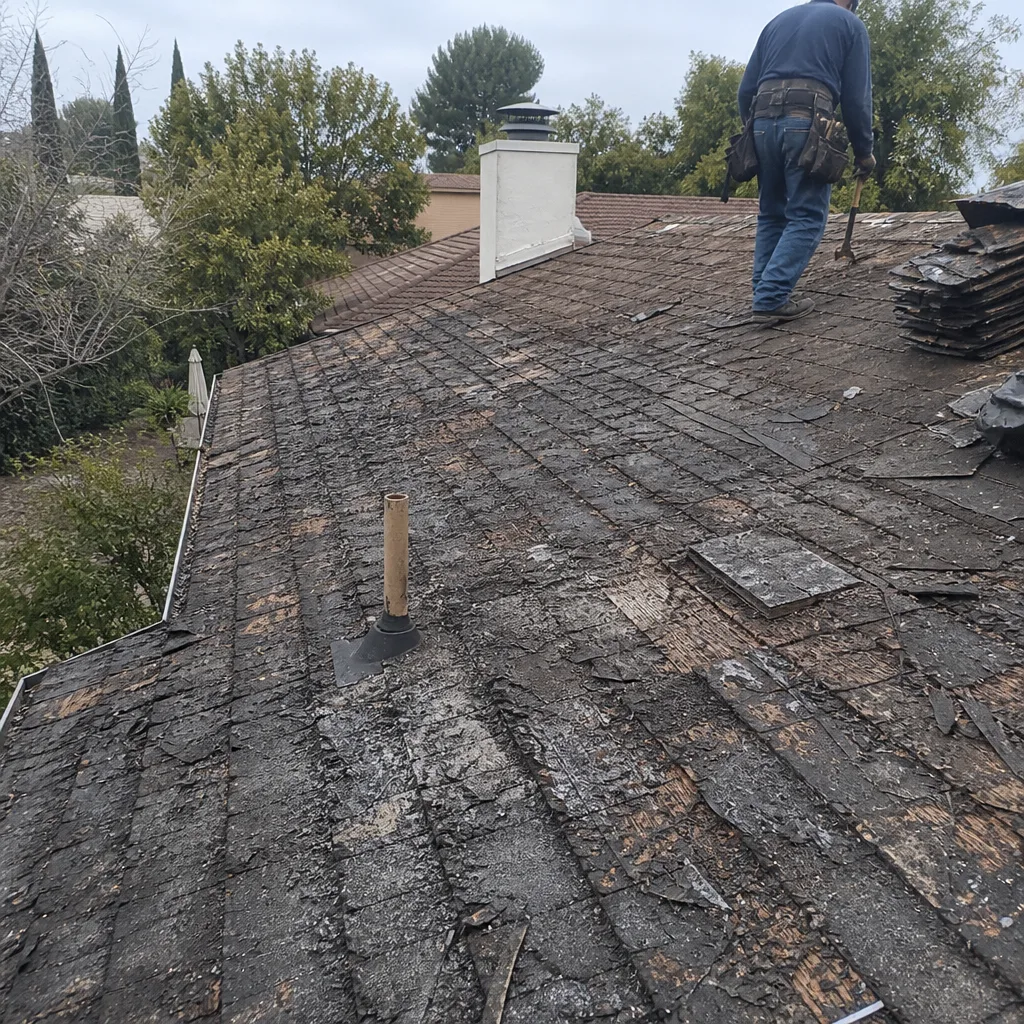 Before
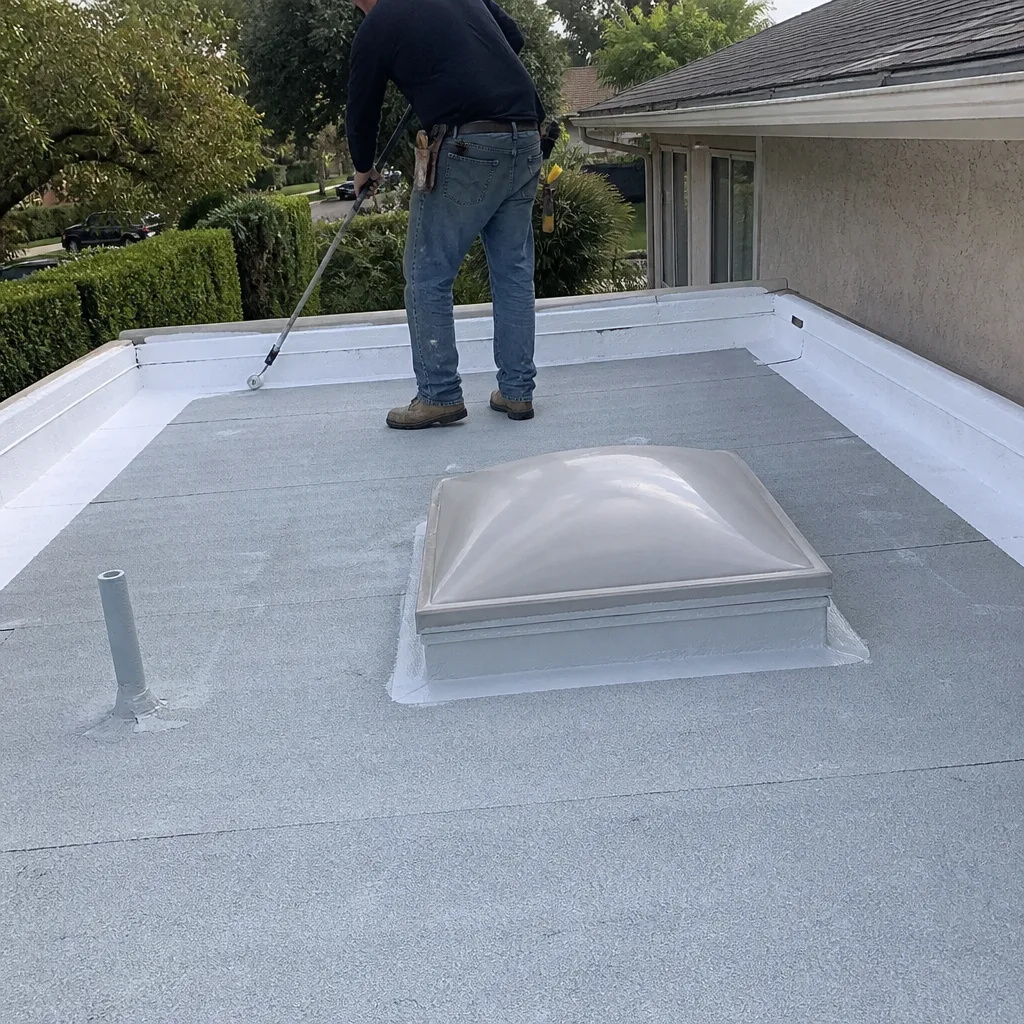 After
After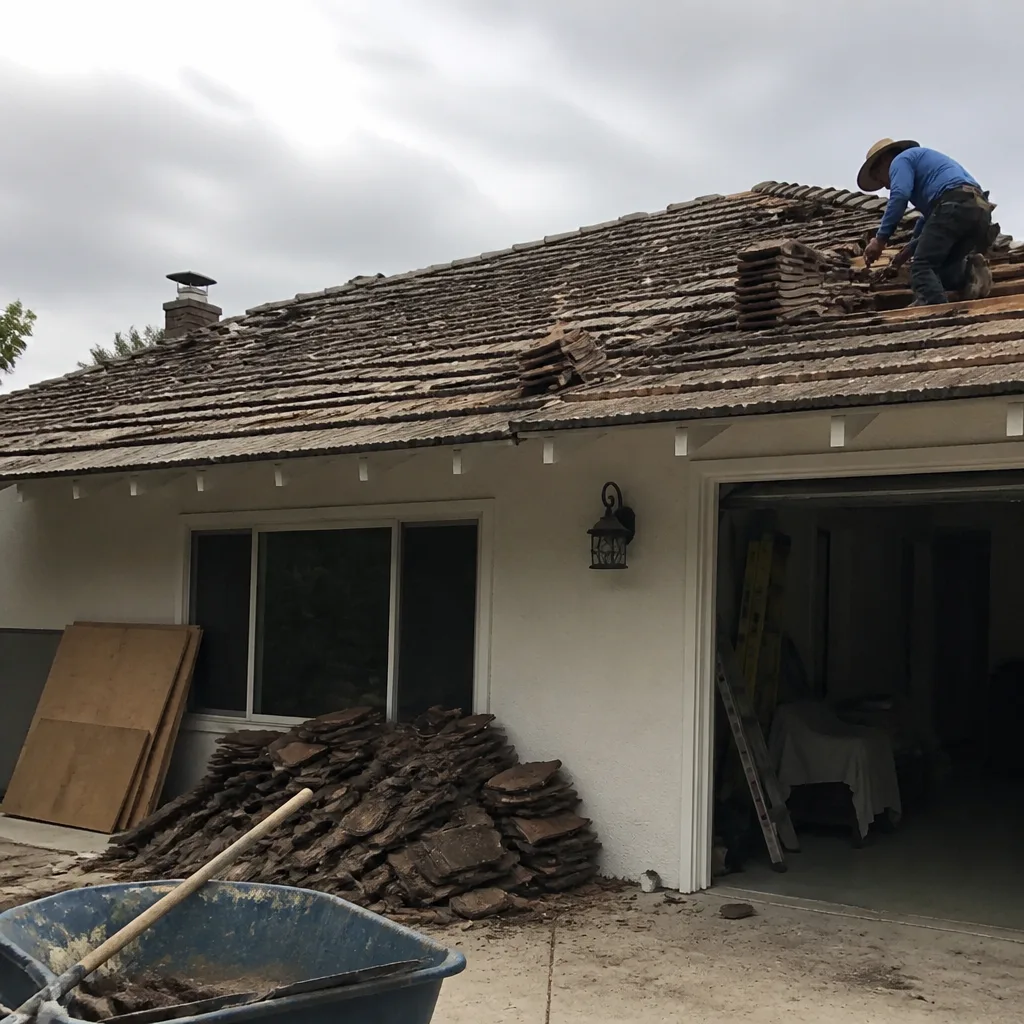 Before
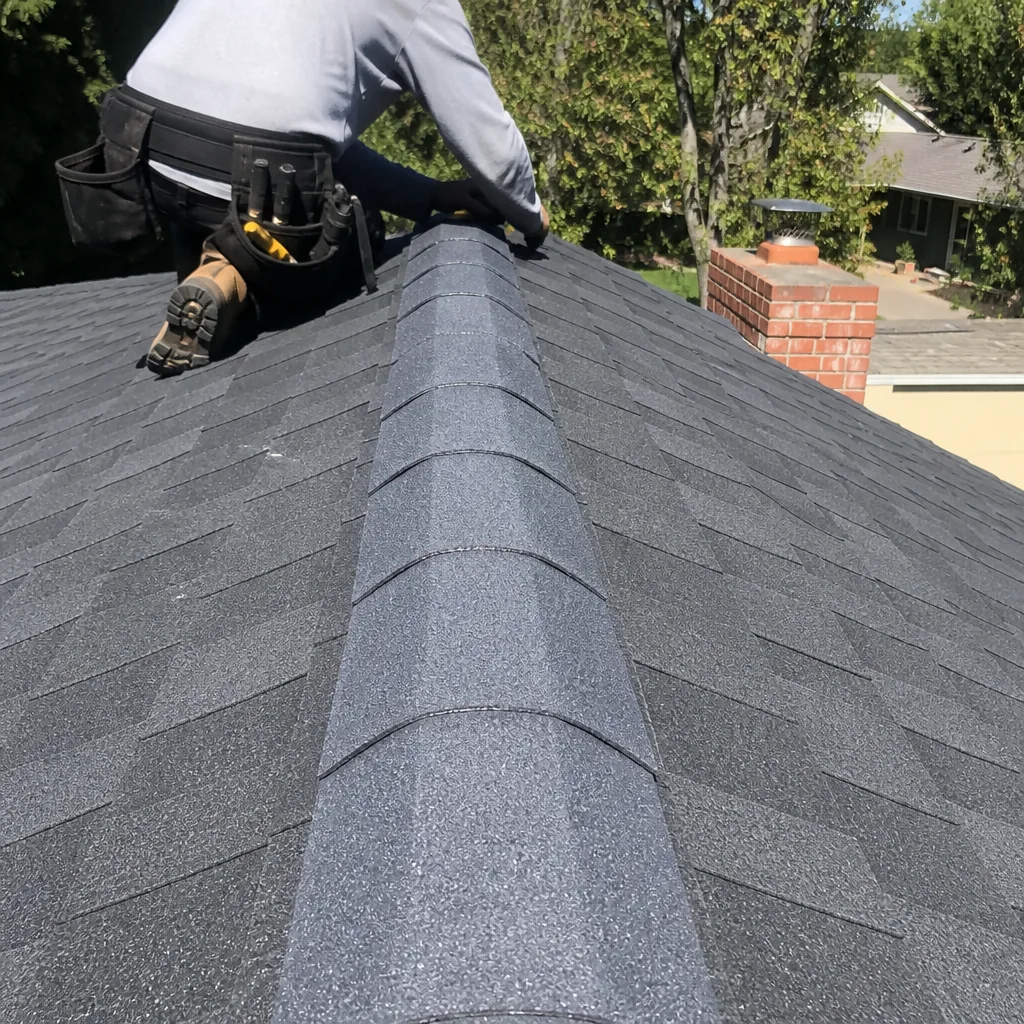 After
After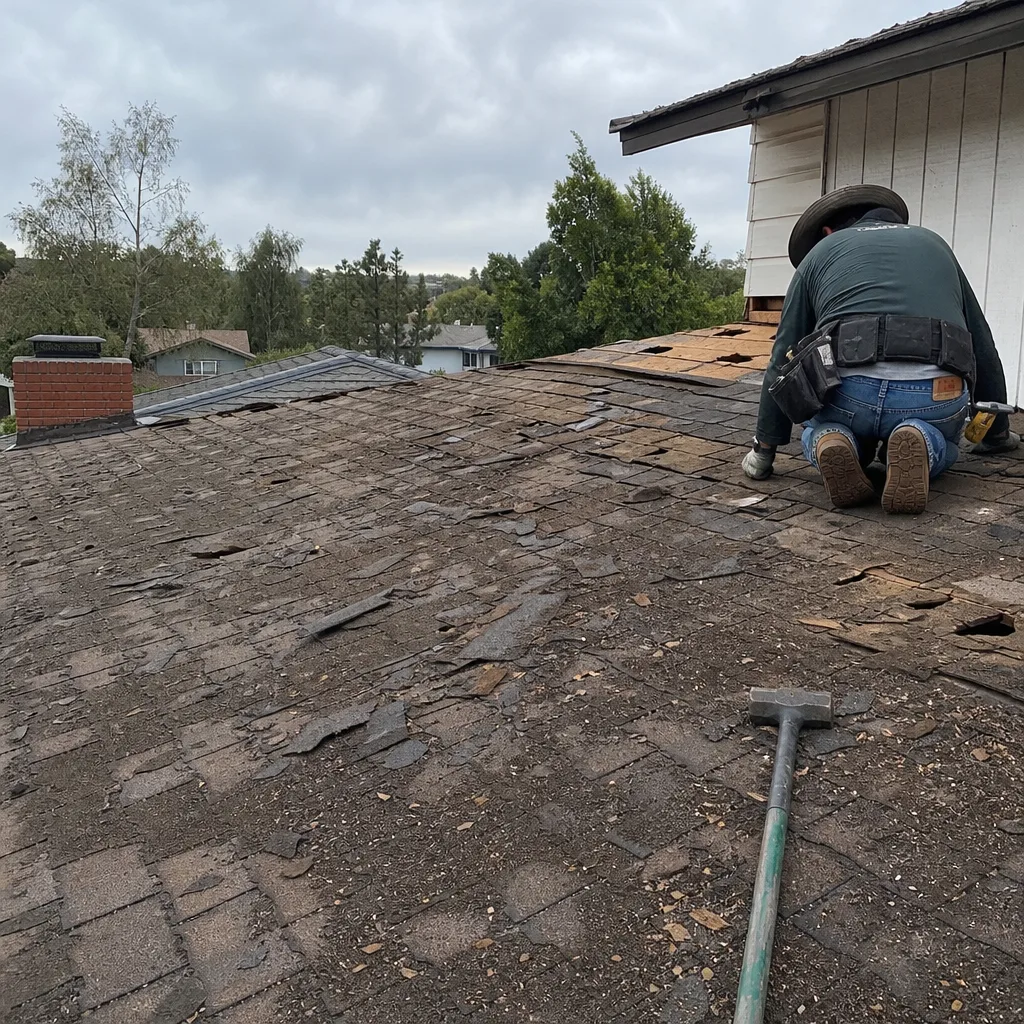 Before
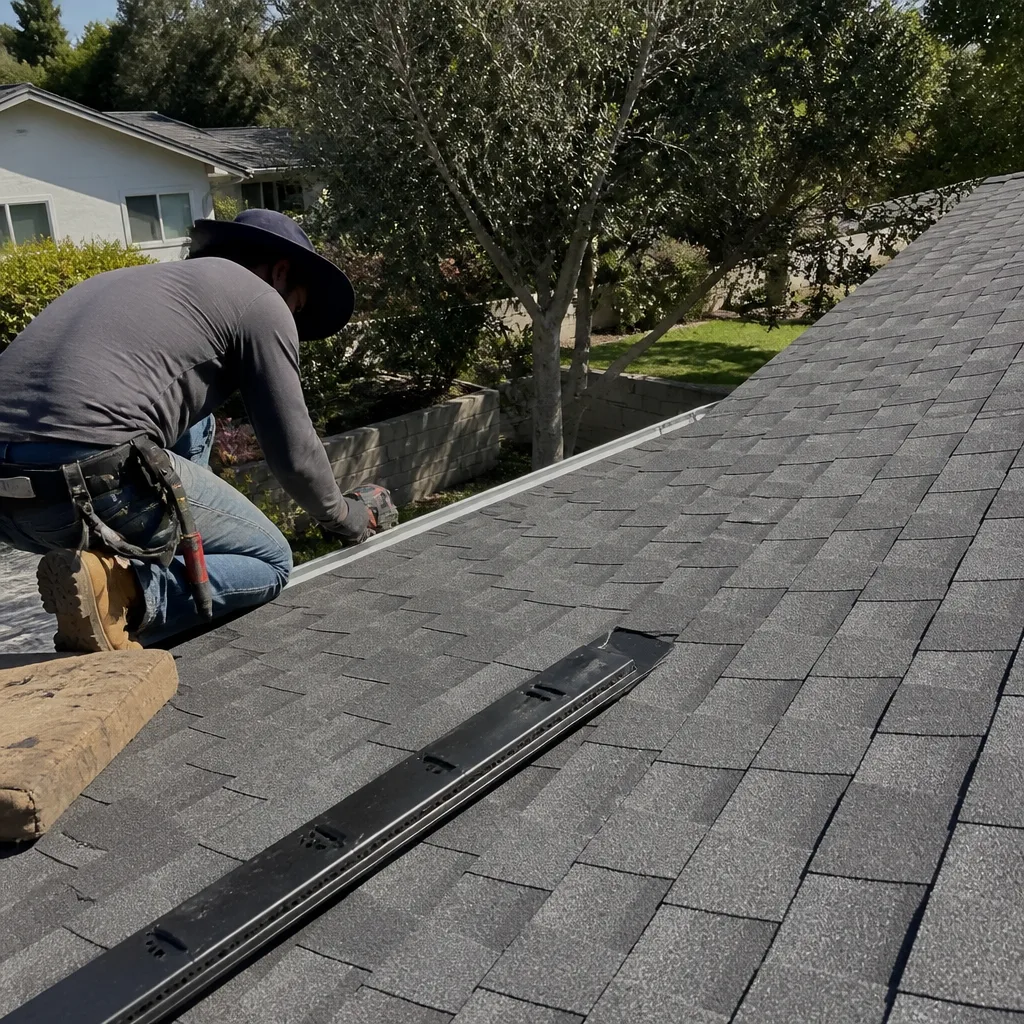 After
AfterWhen to Call a Professional
If you inherited an unpermitted roof and you’re not sure whether it was ever signed off, call the building department first, then call a roofer who can assess what the inspector will find. If you’re planning a reroof and want the permit handled correctly from day one, get it in writing as a separate line item in the estimate. If your roofer can’t tell you which jurisdiction covers your Woodland Hills address, that’s a conversation worth ending early. Roof Installation in Woodland Hills should always include the permit and inspection process in the written scope. Crestview Roofing Co Woodland Hills offers free estimates in Woodland Hills – call (650) 456-5615 to schedule yours.
Frequently Asked Questions
A residential reroof permit in the Woodland Hills area typically costs between $350 and $700, depending on whether the property falls under City of Los Angeles or Los Angeles County jurisdiction and the project valuation. Retroactive permits cost more due to penalty multipliers. Call (650) 456-5615 for an exact quote on your project – estimates are free.
You can be required to obtain a retroactive permit, pay penalty fees, and complete any corrections the inspector flags, and your homeowners insurance may deny future claims for roof damage because the work was performed outside the permitting system. The process is fixable, but it costs more than the original permit would have. Call (650) 456-5615 for an exact quote if you need help getting permitted.
No. Replacing a small number of damaged shingles is a repair, and as long as the work stays under 10% of your roof’s total square footage within a 12-month period, no permit is required in LA City or LA County. The threshold is measured in square footage of disturbed roof, not by the price of the job.
Title 24 is California’s energy code, and it requires that reroofed residential buildings use cool roof materials that meet a minimum solar reflectance index (SRI) standard. In Woodland Hills, which is in Climate Zone 8, the requirement applies, and the inspector will verify material compliance at final inspection. Call (650) 456-5615 if you need help verifying your shingle selection.
Plan review for a standard residential reroof typically takes 1 – 3 business days with LADBS and often less with LA County, depending on current workload. Scheduling the inspection after the roof is complete typically takes another 1 – 5 business days. Plan for one to two weeks from application to final sign-off on a straightforward project.
Legally you can sell it, but you’re opening the door to price concessions, buyer credits, and deal delays once the unpermitted work surfaces during escrow. The smarter move is to retroactively permit the roof before listing. Call (650) 456-5615 for a free estimate on the corrective work if your roof needs attention before the permit can be closed.
The Bottom Line
The permit system in California is not a tax on fixing your own house. It’s the only documentation that proves your roof was built to code, installed with compliant materials, and inspected by a jurisdiction that has a record of it. That record protects your insurance claim, your resale value, and your leverage in any dispute with a contractor. The cost is a few hundred dollars. The cost of skipping it is measured in claim denials, escrow concessions, and the stress of retro permitting under a deadline. If you’re in Woodland Hills and you’re not sure where your roof stands, start by pulling your permit history. Crestview Roofing Co Woodland Hills home is your starting point for a written estimate and straightforward answers.
Written by Dylan Pace, Owner at Crestview Roofing Co Woodland Hills, serving Woodland Hills since 2000. Browse more guides & resources from our team.