
Last updated October 17, 2026
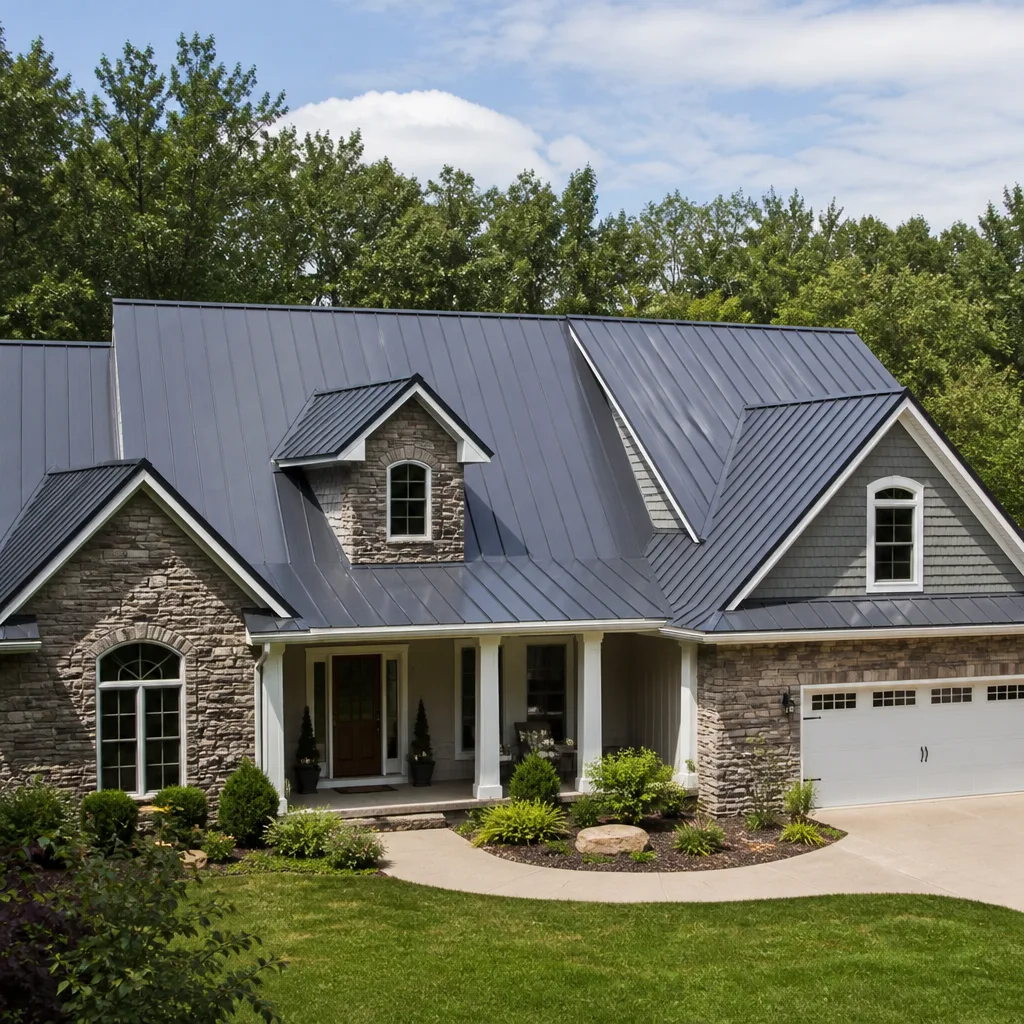 Metal roofing
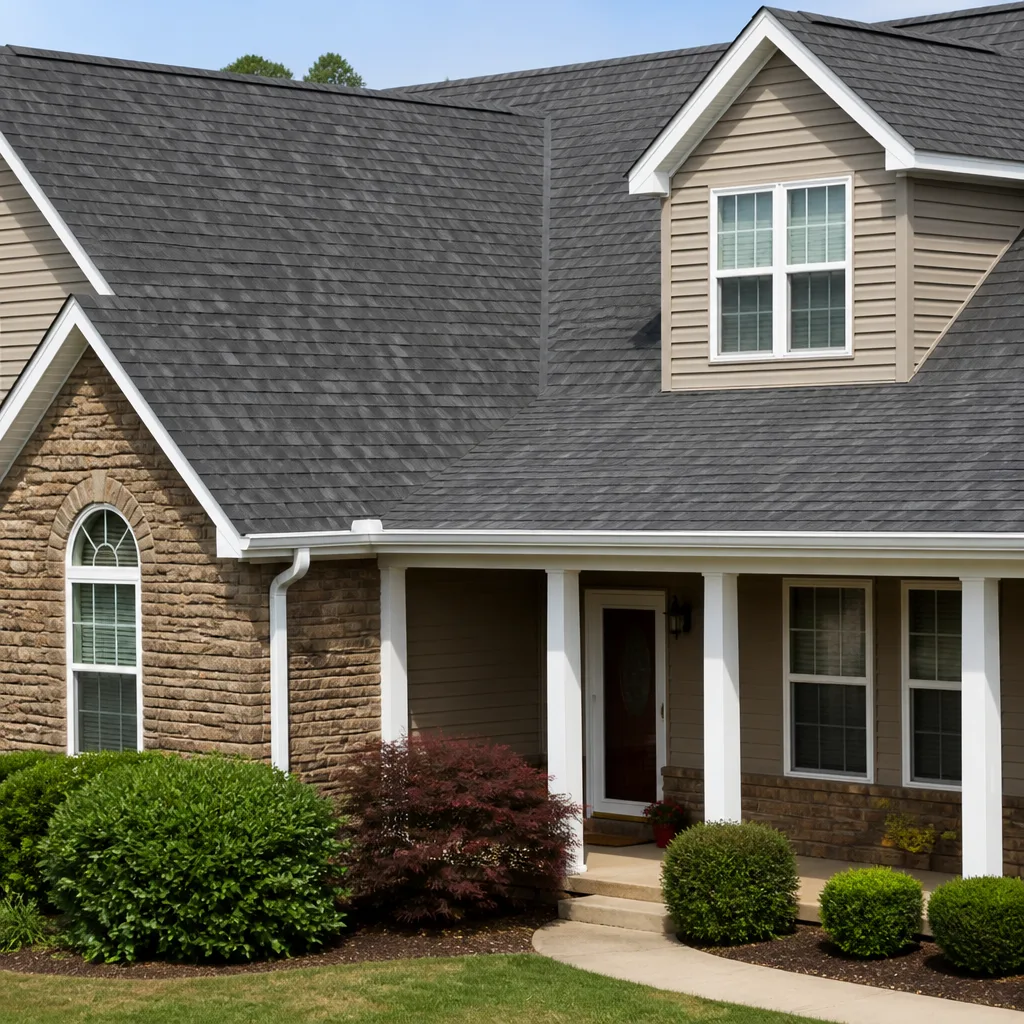 Architectural shingles
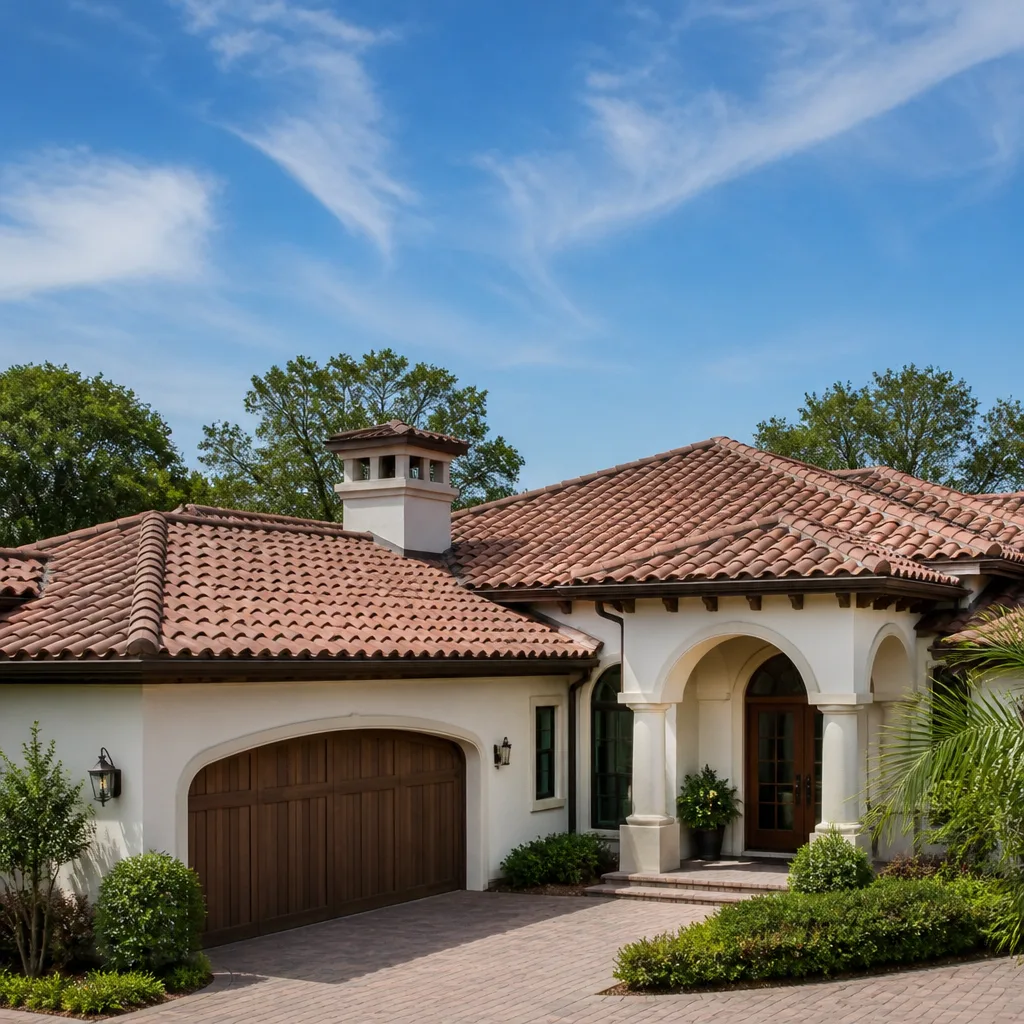 Tile roofing
 GAF
GAF Owens Corning
 Flat & low-slope
Free roof inspection with deck photos before we talk money - GAF and Owens Corning certified installation
How to Hire a Roofing Contractor in Woodland Hills: A Step-by-Step Guide
In California, a roofing contractor can carry a valid license, hold a stack of five-star reviews, and still hand you a quote that quietly omits the line items that decide what you actually pay: disposal fees, permit costs, and what unfolds if the crew finds rotted decking beneath your shingles. That is not fraud. It is simply how most roofing quotes in Woodland Hills are written, and it is why two neighbors with identical 1,800-square-foot roofs can pay $9,000 and $14,000 for the same stated scope. This guide walks you through the hiring process the way a contractor’s paperwork should read: plain, specific, and with no space left for the surprises that turn a written estimate into a moving target. For more guides & resources, see our blog.
Quick Answer
To hire a roofing contractor in Woodland Hills, verify the CSLB license and workers’ comp policy, require a written quote that itemizes disposal, permits, decking replacement rates, and material brands by name, confirm the scope of work includes a written decking inspection clause, and call past clients in your neighborhood. A real price is a complete price; any quote missing those line items is a starting number, not a bid.
Styles & brands we work with
Table of Contents
- Step 1: Verify the License, Bond, and Workers’ Comp Before Anything Else
- Step 2: What a Woodland Hills Roofing Quote Must Include to Be a Real Price
- Step 3: The Scope of Work and the Decking Clause Most Quotes Skip
- Step 4: Red Flags in Communication That Predict Billing Disputes
- Step 5: How to Check Permit Records at the LA County Building and Safety Portal
- Step 6: Choosing Materials That Suit Woodland Hills Heat and Fire Zones
- Step 7: Questions to Ask Before You Sign
- Step 8: How to Compare Quotes Without Losing Your Mind
Step 1: Verify the License, Bond, and Workers’ Comp Before Anything Else
The first filtering act is mechanical, not judgment-based. In California, any contractor performing roofing work over $500 in labor and materials must hold an active C-39 roofing license issued by the Contractors State License Board. You check that at cslb.ca.gov by entering the license number printed on the contractor’s card, truck, or proposal. Look for three things on the license detail page: the status must read “Active,” the classification must be C-39 specifically (a general B license is not a roofing license), and the expiration date must be in the future.
What most homeowners never check is the bond amount and the workers’ comp field. A roofer in Woodland Hills should carry a $25,000 contractor bond (increased from $15,000 in 2023), which functions as a limited fund for consumer claims if the contractor fails to complete the work or meet the contract terms. If the bond reads $15,000, the license record is stale or the contractor has not updated it, and that tells you something about how they run their office.
Workers’ compensation matters more than the bond for your financial protection. If a crew member falls from your roof and the roofer does not carry workers’ comp, the injured worker can pursue your homeowner’s insurance for medical costs. Verify the policy covers the crew working on your roof, not just the owner named on the license. A roofer with zero employees may file a workers’ comp exemption, which is legal but should prompt a different question: who exactly is climbing your roof, and are they an employee of a subcontractor who does carry coverage? Ask for the certificate of insurance and call the carrier to confirm the policy is active. The roofer who hesitates at this request just told you something useful.
Step 2: What a Woodland Hills Roofing Quote Must Include to Be a Real Price
The moment a contractor hands you a quote, treat it as a document to be audited, not a number to be accepted. A written price in Woodland Hills should itemize the full scope in plain English, and the difference between a professional quote and a starting number lives in the line items. Here is the minimum a complete roofing quote should list:
- Material cost per square (100 square feet) with the specific brand and product line named. GAF Timberline HD, CertainTeed Landmark, and Owens Corning Duration each carry different wholesale prices, and a quote that reads “architectural shingle” without a brand name gives the roofer room to install whichever bundle arrived cheapest that week.
- Underlayment type. In Woodland Hills, synthetic underlayment costs roughly $0.18 to $0.25 per square foot in materials, compared to about $0.12 to $0.15 for 30-pound felt. The synthetic product handles heat better and tears less during install. Your quote should name which one is included.
- Flashing work, specified as either reusing existing metal or replacing it. Flashing is the metal strips that seal the joints around chimneys, skylights, vents, and anywhere the roof plane changes. Reusing old flashing saves about $400 to $800 on a single-story home but shortens the life of the new roof.
- Tear-off and disposal as an explicit line. This phase includes removing old shingles, loading debris, and paying dump fees. In the Los Angeles area, disposal fees for a full tear-off typically land between $400 and $900 depending on the number of layers and the weight of the old material. A quote that buries disposal inside another line item is one you cannot verify against the actual dump receipt.
- Permit fees with the actual dollar amount. The city of Los Angeles Department of Building and Safety charges reroofing permit fees based on valuation, and for a typical Woodland Hills reroof the permit often runs $300 to $600. A quote that says “permits extra” is not a quote; it is an invitation to find out later.
- Decking replacement cost per sheet, stated in advance. Plywood deck replacement in the LA market typically runs $80 to $120 per 4×8 sheet including labor and disposal. Without this line, the roofer discovers rotted decking mid-project and names the per-sheet price when you have a torn-off roof and no leverage.
- Warranty terms, distinguishing between the manufacturer’s material warranty and the contractor’s workmanship warranty. The manufacturer covers shingle defects; the contractor covers installation flaws. If the workmanship warranty is missing from the quote, assume it does not exist.
We have walked hundreds of Woodland Hills homeowners through quotes from other roofers, and the pattern is consistent: the proposals missing decking rates, disposal fees, or permit costs are the ones that generate change orders. A quote with all seven line items can still be wrong, but at least it is specific enough to be checked. That is the standard you need. The homeowners we guide are frequently surprised to learn that a lower headline price often simply means the roofer omitted $2,000 to $3,000 in costs they fully intend to bill later.
Step 3: The Scope of Work and the Decking Clause Most Quotes Skip
A quote with the right line items is necessary, but it is not sufficient. The scope of work, which in professional contracts is a short written description of exactly what the crew will do, is where the quality of your roof is actually decided. In Woodland Hills, where the summer heat can bake a roof deck to temperatures that warp plywood, the decking inspection language matters enormously.
Every legitimate roofer will inspect the decking, the plywood or OSB layer beneath the shingles, once the old roof is torn off. Some areas will be soft from years of small leaks, others may be delaminated from heat and moisture. The question is not whether the roofer will look; it is what the roofer commits to doing with what they find. A written scope should say: “Decking will be inspected after tear-off. Any sheet found to be rotted, delaminated, or unable to hold fasteners will be replaced at $X per sheet.” If the contractor will not put that sentence in writing, they have just reserved the right to set the per-sheet price after your roof is open. That is the most expensive conversation in residential roofing, and it happens more often than homeowners want to believe.
Ask also what the scope says about fastening. Shingles in hot climates like Woodland Hills should be installed with six nails per shingle, not four, especially on roofs with a moderate to steep pitch. High nailing, where fasteners are placed above the adhesive strip, is a common installation defect that manufacturers will not honor under warranty. The scope should specify nail count and nailing method. If the word “nailing” does not appear anywhere, that omission predicts a dispute about a leaking roof three years from now.
Finally, check the scope for what happens with your existing roof vents, pipe boots, and edge metal. A defined scope names those components and states whether each is replaced or retained. A vague scope says “re-roof per local code” and trusts the crew to make choices that affect your roof’s ventilation and lifespan without any input from you. You are not hiring a roofer; you are hiring a written document that tells the crew exactly what the job is. If that document is thin, so is your protection.
In our experience: The most common Woodland Hills surprise is a change order for decking, and it almost always traces back to a scope that never mentioned decking at all. Dylan Pace has walked several Woodland Hills roofs where the homeowner paid thousands more than the original quote because one sentence was missing from the contract. That sentence costs nothing to demand and everything to skip.
Step 4: Red Flags in Communication That Predict Billing Disputes
The classic red flag everyone knows is the quote that is suspiciously cheap. The red flags that actually predict billing disputes are communication patterns, and they show up before you ever sign. None of them require a construction background to spot; they only require you to notice what the contractor is avoiding.
- The quote arrives verbally. A roofer who will not write down the price is a roofer who never wants to be held to it. If the number is spoken but not typed, stop the conversation right there. A verbal quote in a city with Woodland Hills property values is not a quote; it is a vibe.
- The contractor will not itemize. You ask for line items, they say “it’s all included.” Translation: the unknowns are included in their profit margin, and they will decide later how much of each unknown you will fund. A professional quote reads like a receipt. An amateur quote reads like a guess.
- Answers get shorter as questions get more specific. When you ask about decking rates, the response shifts from sentences to fragments: “standard stuff,” “we don’t do that,” “you’re overthinking it.” A roofer comfortable with the details will talk about them freely. A roofer planning to bill you later will get tired of the conversation.
- They want a deposit of more than 10% or $1,000, whichever is lower. California law caps the down payment for home improvement contracts at $1,000 or 10% of the contract price. If a Woodland Hills roofer asks for half up front, that request is more than a red flag; it is a legal violation. Walk away and consider reporting the contractor to the CSLB.
- The roofer cannot tell you who will be on your roof. You ask for the crew leader’s name. The contractor says “my guys.” That means the workers could be day labor with no workers’ comp coverage and no roofing certifications. A professional knows the names of the people who will install your roof because a professional already scheduled them.
- They will not put change-order pricing in writing. You ask what happens if the decking is rotted. They say “we’ll work it out.” You have just been told how billing disputes happen. Workable arrangements are written arrangements. “We’ll work it out” means “I’ll decide the price when you have no alternative.”
The underlying rule is simple: the contractor who communicates clearly before the job communicates clearly during the job. The billing disputes that end up in small claims court in Los Angeles County rarely begin with a sudden change in personality mid-project. They begin with a pattern of vague communication that the homeowner wrote off as the roofer being a “get it done” kind of person. The truth is more boring: the roofer was telling you the whole time that the paperwork would be loose.
Step 5: How to Check Permit Records at the LA County Building and Safety Portal
Woodland Hills sits within the city of Los Angeles, so roofing permits are pulled through the Los Angeles Department of Building and Safety, not a separate Woodland Hills office. For details on the process, read Roofing Permits, Codes & Inspections in CA: What You Need to Know. The LADBS has an online permit search portal that any homeowner can use to check the permit history of any address, including the homes the contractor claims to have reroofed. This is the verification step that separates a contractor with a real local track record from one with a website full of stock photos.
Here is the process, step by step:
- Go to the LADBS website and open the “Check Permit Status” or “Property Activity Report” tool.
- Enter the address of a completed roofing project the contractor cites as a reference. You can also enter your own address to see what permits are already on file for your home.
- Review the permit record for the type “reroof” or “roofing.” Look for the final inspection status. A permit that was issued but never had a final inspection is a job that was never signed off by a city inspector.
- Note the contractor name on the permit. It should match the roofer you are considering. If a subcontractor pulled the permit under a different name, ask why.
- Check the permit valuation. This should roughly align with the contract price. A significant mismatch can indicate underreported valuation, which matters if you ever have a dispute or an insurance claim.
The permit record is the closest thing to a public performance history for a Woodland Hills roofer. If a contractor says they have reroofed 50 homes in the area and you cannot find a single permit under their name, they have either worked without permits, which is a legal problem, or they have embellished their history, which is a trust problem. Either way, the permit portal just saved you from hiring them.
Permits also protect you directly. A permitted roof triggers city inspection of the underlayment, nailing, and flashing details before the shingles cover them. An unpermitted roof skips that inspection entirely, and no contractor can inspect their own work to a meaningful standard. For a Woodland Hills homeowner, the permit is a few hundred dollars of city oversight that buys a second set of eyes on the work. Every Roof Replacement in Woodland Hills we complete includes permit fees in the written quote, and the final inspection is part of the job, not an optional add-on.
Step 6: Choosing Materials That Suit Woodland Hills Heat and Fire Zones
Woodland Hills owns a specific climate profile: long, hot summers with regular triple-digit days, occasional Santa Ana wind events, and a location that has historically been mapped in higher fire severity zones in sections of the community. Those conditions are not marketing language; they are engineering inputs. The shingle that works on a shaded coastal roof three miles from the beach is not always the right answer here.
Heat performance matters. Asphalt shingles in a hot-sun climate like Woodland Hills should carry a high solar reflectance rating where the manufacturer offers one. CertainTeed’s Landmark series and Owens Corning’s Duration series both offer cool-roof color options that the California Energy Commission recognizes for Title 24 building energy compliance. Lighter colors and cool-roof-rated granule formulas reduce attic temperatures, which lowers cooling load and extends the life of the shingle itself. The concept to know is thermal cycling: shingles expand and contract with every hot-cold cycle, and in Woodland Hills summers the surface temperature of a dark roof regularly exceeds 160 degrees Fahrenheit. A shingle engineered for heat cycling outlasts one that is not.
Fire resistance is not optional in sections of Woodland Hills. California Building Code Chapter 7A applies to certain areas designated as Wildland-Urban Interface zones. In those zones, the roof covering assembly, not just the shingle, must meet a Class A fire rating, and the assembly includes the underlayment and the edge metal details. GAF and CertainTeed both manufacture Class A rated shingle systems, but the system rating only holds if the roofer installs the full system as tested. Ask your contractor whether your specific address falls in a fire hazard severity zone, and ask which Class A system they are quoting. From Crestview Roofing Co Woodland Hills home base, we check every address against the LAFD hazard maps before recommending a material set, because the right choice changes from block to block.
Ventilation is the silent shingle killer. A Woodland Hills attic that hits 150 degrees in August without adequate airflow cooks shingles from below, shortens their life by years, and voids manufacturer warranties in some cases. The quote should address ridge vents, eave vents, and attic fan replacement if the existing ventilation is below what the shingle manufacturer requires. When we complete Roof Installation in Woodland Hills projects, ventilation review is part of the written scope because a new roof on a suffocated attic is a warranty claim waiting to happen.
Step 7: Questions to Ask Before You Sign
You have verified the license, audited the quote, reviewed the scope, and checked permit records. The remaining questions are the ones that reveal how the contractor thinks about their own work. Print this list and use it in the final conversation before signing.
- “Will you itemize disposal, permit fees, and decking replacement rates in the contract?” The answer must be yes. Not “it’s all included.” Yes, with dollar amounts.
- “What is your workmanship warranty, and is it in writing?” The answer should be a specific duration, not “we stand behind our work.” At Crestview, every repair carries a 365-Day Done Right Promise in writing, and if a covered repair fails within 365 days, we fix it at no charge, including a free second visit. If your contractor cannot answer this question in one sentence, keep looking.
- “Who is the crew leader, and are all workers covered by workers’ comp?” You want a name and a certificate of insurance, not “my guys.”
- “What happens if you find rotted decking?” The answer should quote the per-sheet rate already listed in your estimate. If they renegotiate at this question, they just renegotiated your entire contract.
- “Will you pull the permit, and is the final inspection included in the price?” Permits are non-negotiable for a full reroof. If they suggest skipping the permit to save money, end the conversation.
- “Do you provide photo documentation of the work?” The roofer who photographs before, during, and after is the roofer who has nothing to hide. The Relay Visibility Guarantee at Crestview includes before-and-after photo documentation on every job, because a homeowner should see the underlayment and flashing before the shingles cover them.
- “When will you arrive, and how will I know?” A professional gives you a trackable arrival time. The four-hour window is not a scheduling system; it is the absence of one.
If a contractor answers all seven questions clearly and in writing, you are not hiring a roofer. You are hiring a documented outcome.
Step 8: How to Compare Quotes Without Losing Your Mind
You have three quotes. One is $11,200. One is $9,800. One is $8,500. The instinct is to compare the bottom lines, and that instinct is wrong. The bottom line comparison is the last step, not the first. Here is the order of operations that actually protects you:
- Compare the scope language line by line. Does each quote specify the same shingle brand and product line? The same underlayment? The same nail count? A quote for GAF Timberline HD at six nails per shingle is not comparable to a quote for a generic architectural shingle at four nails. Normalize the scope before you compare the dollars.
- Compare the sheet rate for decking. If one quote says $80 per sheet and another says $120, and the scopes are otherwise identical, adjust your comparison: on a roof with 10 rotted sheets, the $80 quote saves $400. On a roof with 40 rotted sheets, it saves $1,600.
- Compare the exclusions. What does each quote explicitly not include? A broken roof tile replacement clause, a gutter guard exclusion, a chimney crown repair omission. The cheapest quote is often the one with the longest exclusion list.
- Compare warranty terms. A one-year workmanship warranty is meaningfully different from a five-year warranty. A contractor confident enough to put 365 days in writing on every repair, with a free second visit if something fails, is betting on their own work. Compare that bet.
- Finally, compare the total. Only now does the dollar comparison mean anything, because you have already adjusted for scope, decking rates, exclusions, and warranties.
This method is slower than grabbing the cheapest number, and the time is the point. The Woodland Hills homeowner who spends 45 minutes normalizing three quotes before choosing a roofer is not being cautious; they are being efficient. They have converted a guessing game into an apples-to-apples comparison, and that is the entire skill of hiring well.
Common Mistakes to Avoid
- Accepting a quote that lists materials by generic category. “Architectural shingles” is not a material specification. The difference between a premium CertainTeed product and an entry-level generic can be $2,500 on a Woodland Hills roof, and you cannot audit what was never named.
- Skipping the workers’ comp verification. A fall injury on your property without workers’ comp coverage becomes your homeowner’s claim. The certificate of insurance is a five-minute phone call to confirm. This is the most expensive five minutes you can save.
- Treating the permit as an optional line item. Unpermitted roofing work in Los Angeles can complicate a future home sale and void your manufacturer’s warranty. The permit is not a tax; it is a city inspection of work you cannot inspect yourself.
- Paying a deposit over the legal cap. California sets the limit at $1,000 or 10%, whichever is lower. If the roofer asks for more, the roofer is breaking the law before the job starts.
- Believing the “we’re already in the neighborhood” discount. A roofer who gives you a discount for a job they were supposedly going to do next door is making up the urgency. Legitimate schedules are not built on coincidental proximity.
- Hiring the first roofer who answers. Woodland Hills has more than enough qualified roofing contractors that you never need to settle for the one who picked up. Get three written quotes, but know that two of them will likely be written poorly. That is the point.
- Signing a contract with no decking clause. This is the single most expensive mistake in Woodland Hills roofing. One sentence in the scope can mean the difference between a planned replacement and an open-ended renegotiation.
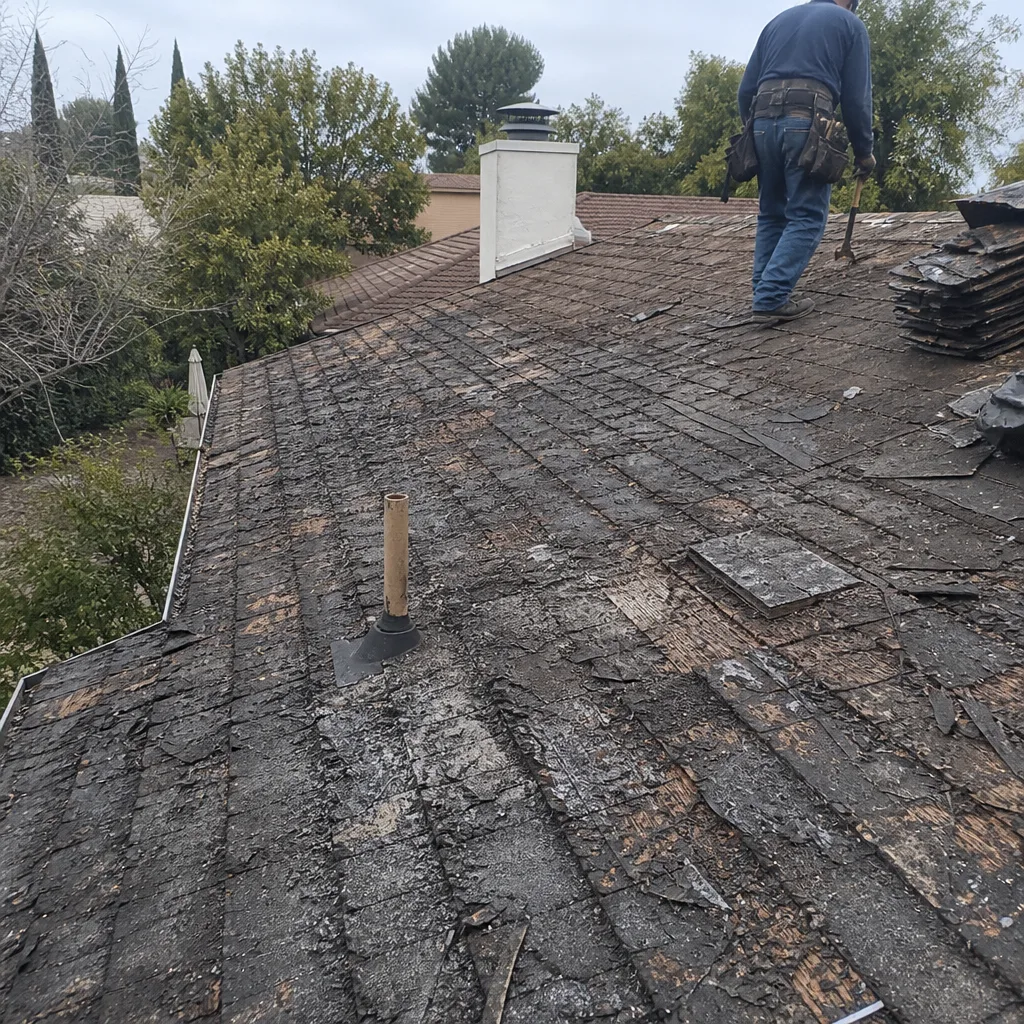
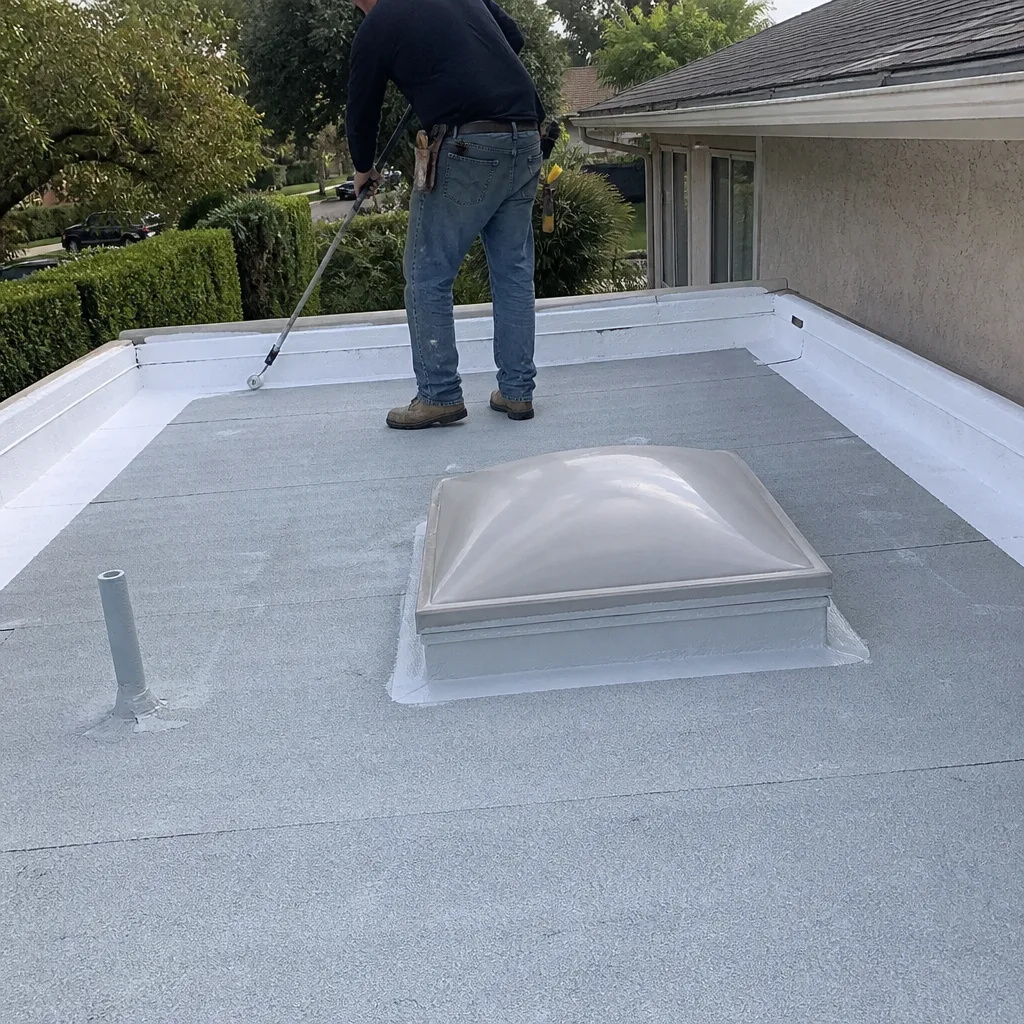
See the difference
 Before
 After
After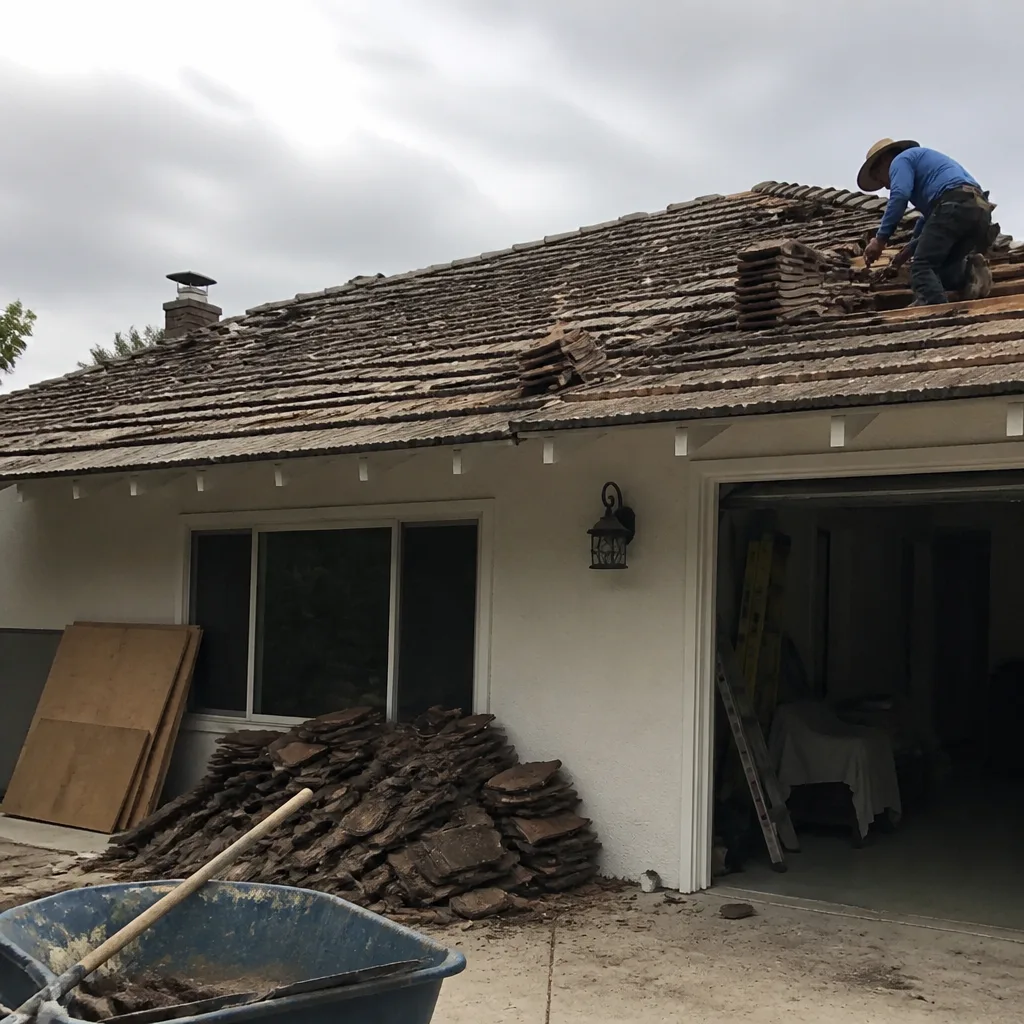 Before
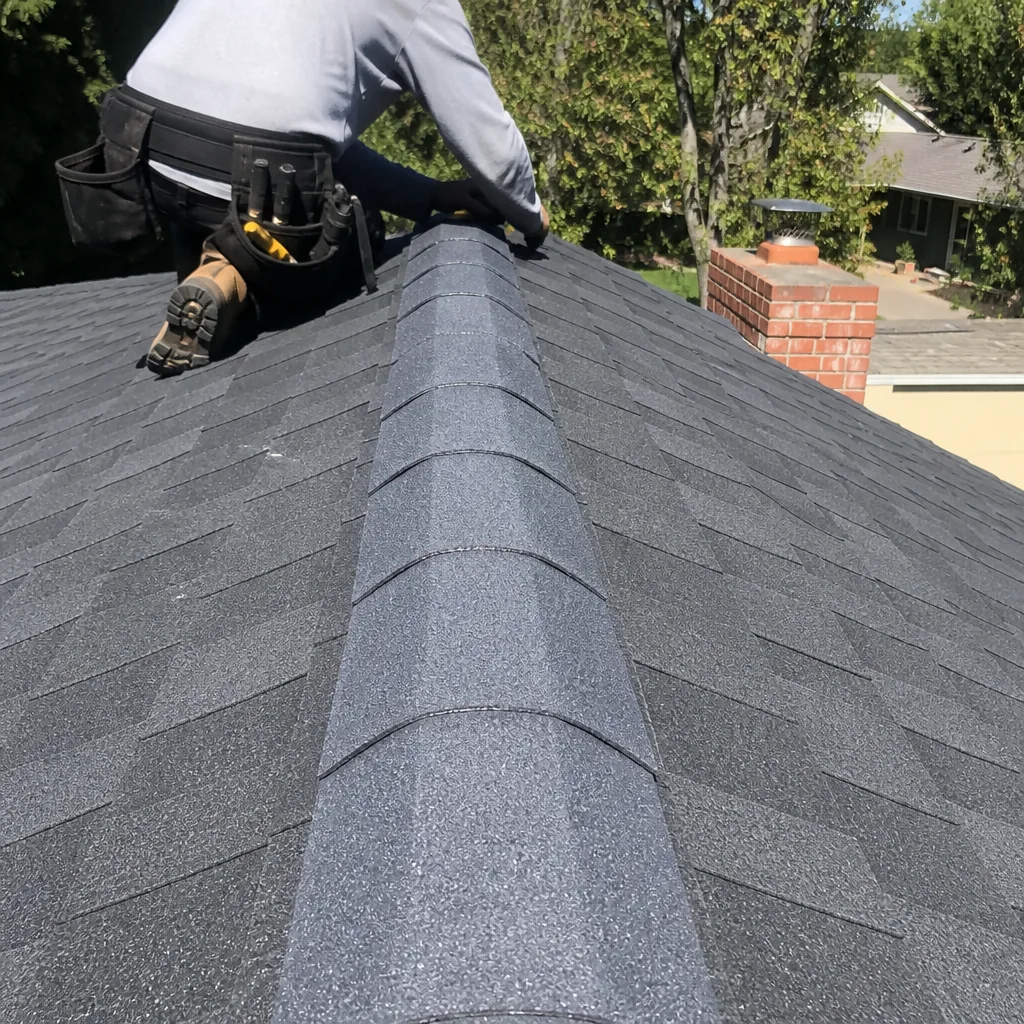 After
After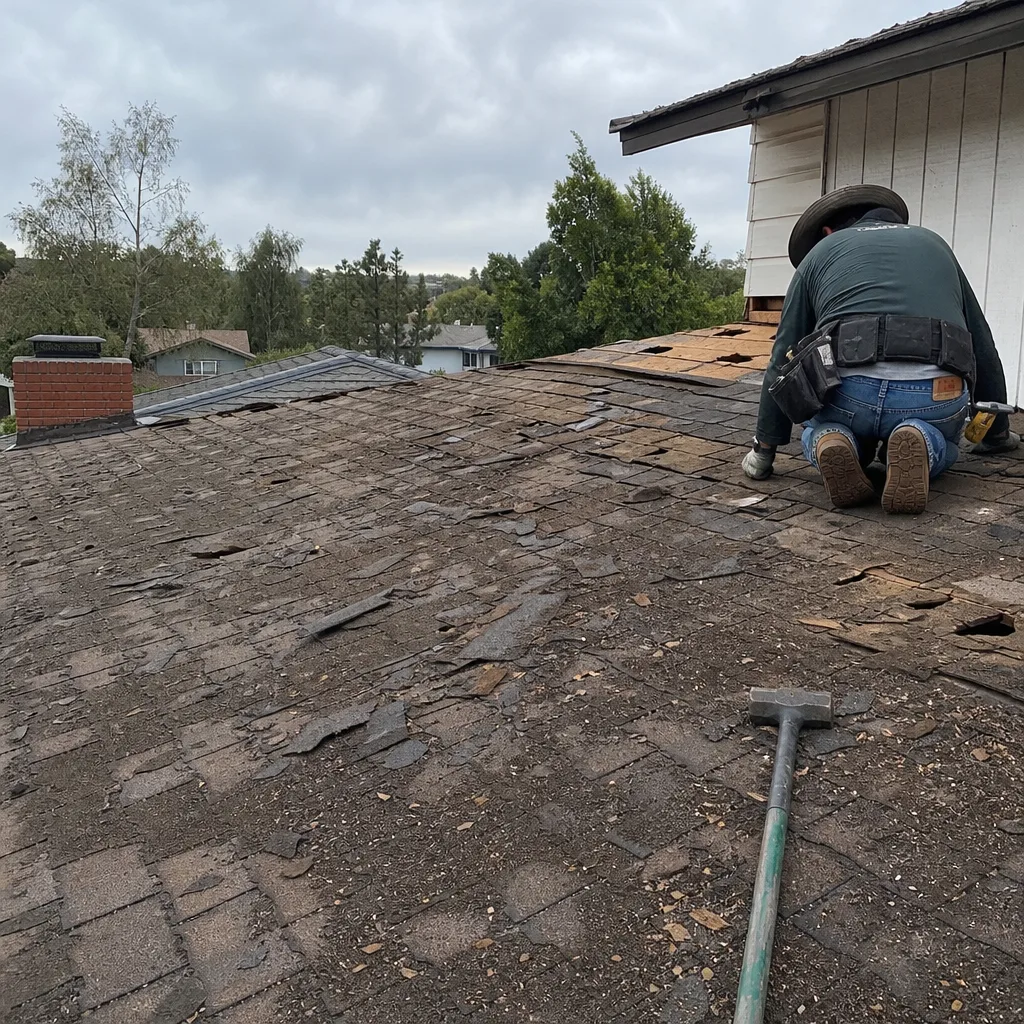 Before
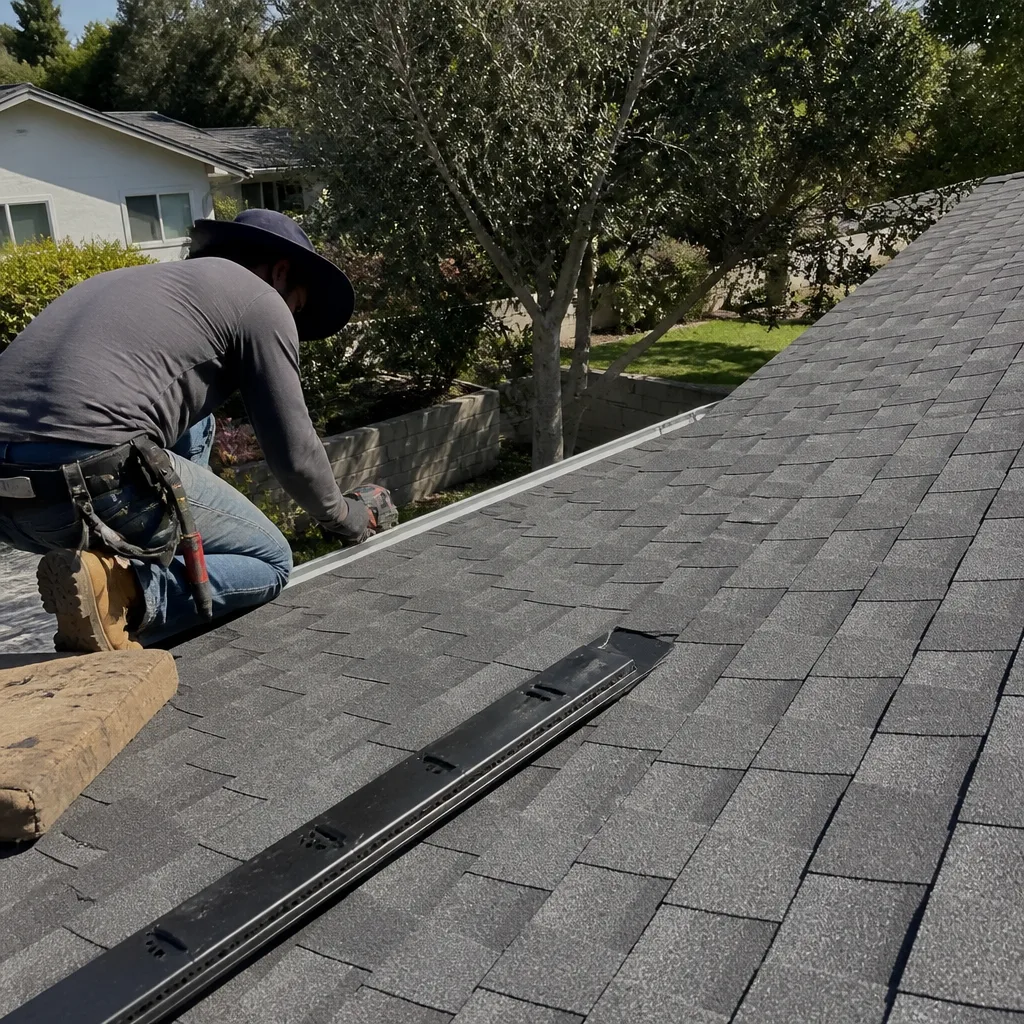 After
AfterWhen to Call a Professional
You should call a professional roofer whenever you see signs of active or progressive roof damage: missing or curling shingles, granules accumulating in gutters, ceiling stains that recur after rain, daylight visible through the attic, or a roof that is past 20 years old and has never been inspected. A roof that leaks in multiple places, sags visibly, or shows signs of structural movement is not a repair conversation; it is a replacement conversation that needs to happen quickly. Woodland Hills homeowners walking onto a roof for a DIY assessment are taking a risk they should not take; falls from roof edges and skylights are among the most common home injury sources, and the roof you are most likely to misjudge is your own. Crestview Roofing Co Woodland Hills offers free estimates in Woodland Hills. Call (650) 456-5615 and we will inspect, photograph, and price the work before anything is signed.
Frequently Asked Questions
In Woodland Hills, a full roof replacement on a typical 1,800-square-foot single-story home runs between $10,000 and $18,000 for architectural asphalt shingles, including tear-off, disposal, and permits. The spread comes down to shingle brand, decking condition, roof pitch, and whether the scope includes ventilation upgrades or fire-rated underlayment. For exact pricing on your roof, call (650) 456-5615 for a free written estimate with every line item priced before work begins.
Go to cslb.ca.gov and enter the contractor’s license number in the license check tool. Confirm the status reads Active, the classification is C-39 for roofing, and the bond amount is current. Then request the certificate of workers’ comp insurance and verify with the carrier that the policy is active and covers the crew assigned to your roof.
Yes, a city of Los Angeles reroofing permit includes inspections at multiple stages, typically after tear-off and after underlayment and flashing installation but before shingles are installed. The final inspection signs off on the completed work. A contractor who pulls the permit and then skips inspections is not completing the permitted scope and is leaving you with an unapproved roof.
A complete roofing quote names the shingle brand and product line, the underlayment type, the flashing scope, tear-off and disposal costs, permit fees with the actual dollar amount, the per-sheet decking replacement rate, and the workmanship warranty term. Use our Roof Repair Maintenance Checklist for Woodland Hills Homeowners to verify nothing is missing. If any of those line items is missing, the quote is a starting number, not a fixed price. At Crestview, a written price is delivered before any work starts, and the number on the estimate is the number on the invoice.
Most Woodland Hills roof replacements on a single-story home are completed in two to five working days, depending on roof size, pitch, tear-off layers, and decking condition. The time for permits and inspections runs on the LADBS schedule and can add a few days before and after the physical installation. A roofer cannot honestly promise a same-day roof replacement for standard work, and anyone who does is not describing your job.
It should not, if the written quote includes the decking replacement rate, disposal costs, permit fees, and all material specifications. The price changes when a contractor wrote an incomplete quote and discovers extras mid-project. At Crestview, the written price includes the full scope, and if the decking reveals damage we quoted the per-sheet rate before you ever signed.
The Bottom Line
Hiring a roofing contractor in Woodland Hills is not a personality contest; it is a paperwork audit. The license, the bond, and the workers’ comp check are your first line of defense. The written quote with all seven line items is your second. The decking clause is your third. And the permit record is the public history that confirms the contractor actually does what they say they do. Every failure point in residential roofing traces back to a missing sentence or a vague phrase, and every protection starts with asking for the sentence in writing. Dylan Pace built Roof Repair in Woodland Hills on the principle that a roofer should hand you a document you can verify before you hand back a signature. If you are ready for a written price, call (650) 456-5615 for a free estimate. A live person answers, and the number on the page is the number on the invoice.
Written by Dylan Pace, Owner at Crestview Roofing Co Woodland Hills, serving Woodland Hills since 2000.